Article
What Is a Sect in Xianxia Novels? Sects, Schools and Clans Explained
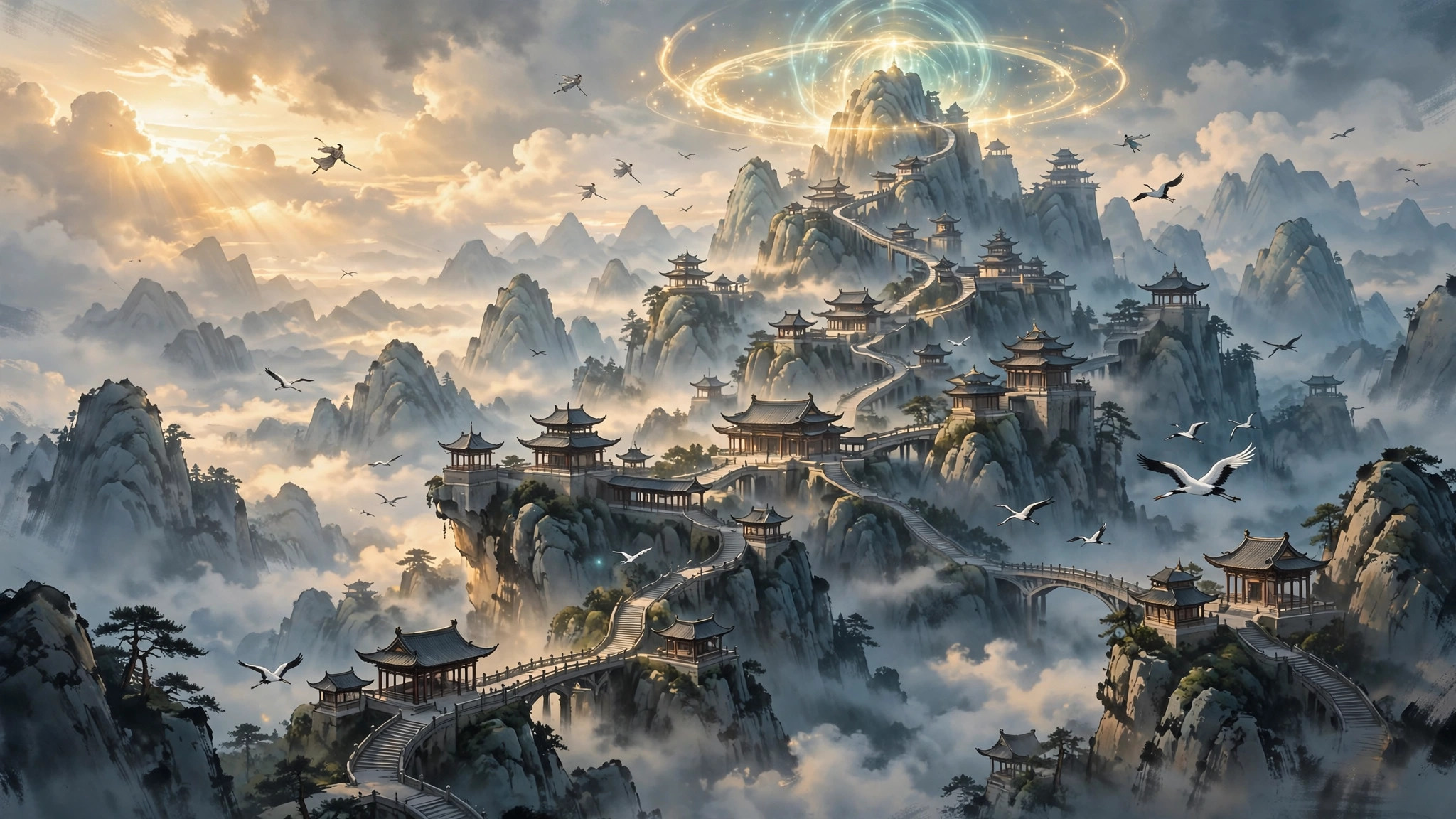
Think of a sect (宗门, zōngmén) as part university, part corporation, part army, and part family: a huge organization where thousands of cultivators study the same arts, compete for scarce resources, and occasionally annihilate a rival organization before lunch. The sect is how the xianxia world organizes people who are getting strong — and almost the first thing most protagonists do after stumbling into the cultivation world is knock on a sect's gate and beg to be let in.
English translations use several words for roughly the same institution, and knowing the differences saves you a lot of confusion.
A sect (宗门, zōngmén) is the most common form: a large, hierarchically organized group of cultivators founded on a shared set of techniques and rules. Sects recruit from the general population, run their own territory, and often control entire mountain ranges or cities. They're the sects you'll see in nine out of ten novels — the hero joins one, climbs its ranks, and eventually either saves it or leaves it in ruins.
A school (门派, ménpài) is often the same thing under a different translator's pen, though in Chinese the word leans toward the martial-arts tradition — schools of swordsmanship, schools of a particular master's lineage. Wuxia stories lean on this word far more than xianxia does. If you want the wuxia-flavored version of this whole system, our explainer on the jianghu covers that world of martial heroes.
A clan or family (家族, jiāzú) is a sect you can't quit because you're born into it. Clans recruit by bloodline instead of talent tests, and their internal politics are somehow even more vicious — nothing concentrates ambition like a shared ancestor. Many protagonists start in a clan, get despised for weak talent, and leave to join a sect: the xianxia equivalent of moving out of your parents' house.
In practice, novels treat all three as variations on one theme: an organized group with its own techniques, its own turf, and its own enemies.
Sects are strict hierarchies, and the rank structure is one of the most consistent conventions in the genre. Fans commonly describe the ladder like this, from the bottom up:
Ranks aren't just decoration. Your rank decides which techniques you may learn, how many spirit stones you draw as a salary, and — most importantly in story terms — how many people are allowed to look down on you.
Joining a sect is rarely as simple as applying. Most novels open their sect phase with a recruitment scene, and the formula is remarkably stable:
Fans sometimes ask whether these exams are realistic. They're not meant to be: they're auditions for the reader, proving within a few chapters that the hero is special, the system is brutal, and the story is going to be fun.
Strip away the drama and a sect is a resource-delivery machine. Here's what a cultivator actually gets out of membership:
Techniques. This is the big one. A sect's library — the scripture pavilion or sutra depository — holds the cultivation methods, combat arts, and secret arts accumulated over centuries. The best techniques are restricted by rank, which is exactly why rank matters so much.
Spiritual land. Sects are built on spirit veins and qi-rich mountains; the ambient spiritual energy on sect territory is what makes rapid cultivation possible at all. A rogue cultivator training in a cave is like a student studying by candlelight — possible, but miserable.
Protection and identity. A sect's name is a shield. Attacking a sect disciple invites retaliation from the whole organization, which is why bullies in these novels always ask "which sect are you from?" before deciding how rude to be. Conversely, enemies of your sect become your enemies by default — membership has a price.
Missions and income. Sects pay their disciples in spirit stones, pills, and techniques, and in return disciples run missions: hunting demonic beasts, guarding trade caravans, exploring ruins. Missions are the genre's engine for sending protagonists into danger on the sect's dime.
A social ladder to climb. This is the real product. The sect gives the protagonist a visible hierarchy to ascend, rivals at every rung, and an audience to impress. Without the sect, cultivation is a private hobby; with it, every breakthrough is a public event.
Sects are not just setting — they're story engines, and they serve the plot in ways authors rely on constantly.
They manufacture conflict. A sect concentrates ambitious, powerful people in one place and hands them unequal resources. Scheming is inevitable: disciples sabotage each other, elders back rival heirs, and rival sects wage proxy wars over spirit mines. The sect is a pressure cooker, and the protagonist is the thing that explodes.
They scale the story. Early on, the sect is the whole world — the protagonist fights for a place in the inner court. Later, the sect becomes a stepping stone: the hero outgrows it, leaves for greater powers, and returns to settle old scores. Many of the genre's most satisfying moments are homecomings.
They define good and evil. Orthodox (正道, zhèngdào) sects preach morality and restraint; demonic (魔道, módào) sects preach power at any cost. Most novels start the hero in an orthodox sect and use demonic sects as the terrifying other side — though plenty of stories blur the line, and some heroes discover their own sect was the corrupt one all along. That inversion, when it lands, is one of the genre's best twists.
They give the hero something to lose. The mentor who believed in them, the friends from the outer court, the sect that fed them when they were nobody — these attachments are what make later betrayals and sacrifices hurt. A protagonist with no sect is a protagonist with nothing at stake.
Here's the part new readers sometimes miss: for all its politics and backstabbing, the sect is usually the closest thing the protagonist has to a home. The cultivation world is vast, cold, and full of people who will kill you for your storage ring. The sect is warm by comparison — it has rules, routines, teachers, rivals who hate you to your face instead of stabbing you in the dark, and a mountain that looks like home when you fly back to it.
That's also why the best sect arcs always end the same way: the hero has to leave. Sects in xianxia are temporary by design — they're the launchpad, never the destination. Understanding that makes the whole genre click into place: every gate the hero knocks on, every elder who sneers at them, every tournament they fight through is the story asking one question — how far past this place can you go?