Article
What Is a System in Xianxia and Xuanhuan Novels? Quests, Levels and Stat Windows Explained
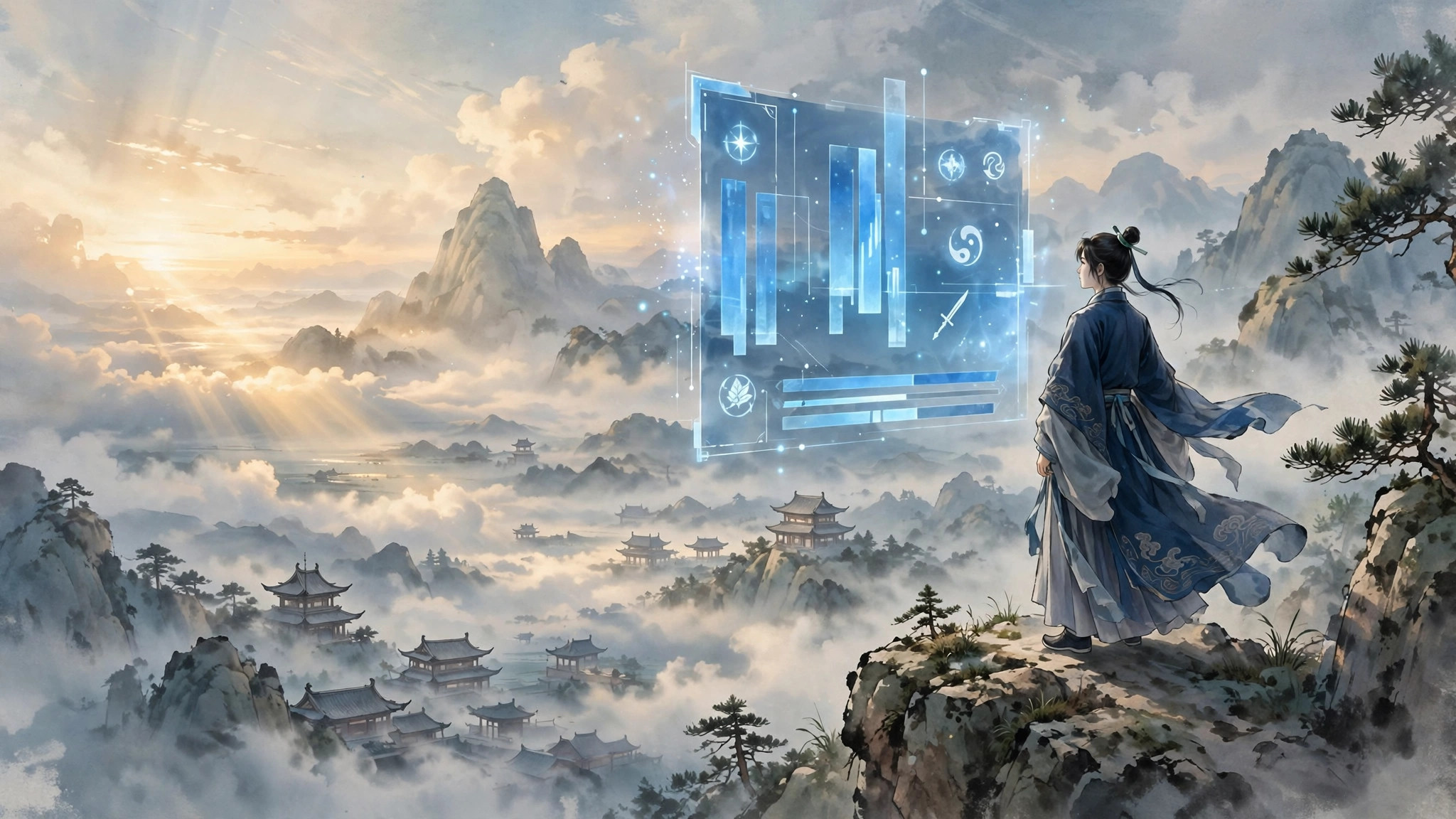
A cultivator bows to no master, trains for no sect, and yet keeps getting stronger on a schedule. The reason floats in front of his eyes, visible to him alone: a translucent panel listing his level, his skills, and a new task with a reward attached. In xianxia and xuanhuan novels, a "system" (系统, xìtǒng) is a game-like interface that lives inside the story world — a status window, quest list, and reward mechanism that only the protagonist (or a small, defined set of characters) can see. It turns cultivation, normally a vague matter of meditation and insight, into something measurable: do the task, collect the points, spend them, grow stronger, repeat.
The system is not a piece of technology the hero built, and it is usually not explained in full. It simply arrives — granted by fate, by a dying immortal, by rebirth itself — and starts issuing instructions. That unexplained arrival is part of the appeal. Readers do not need a manual for the interface, because they already know how games work.
Different novels dress the system differently, but the machinery underneath is remarkably consistent:
A status window. The hero's current condition rendered as numbers: level, cultivation realm, strength, speed, spirit, and a list of skills with their own ranks. Where an ordinary cultivator might feel that his swordplay has improved, a system hero can read that his Sword Skill has risen from Level 3 to Level 4. Fans commonly describe this as the system's core trick — it makes invisible progress visible.
Quests. Tasks with stated goals and stated rewards. Daily quests ask for routine work, like training or refining pills. Main quests push the plot forward, like surviving a sect tournament or exploring a secret realm. Some quests carry penalties for failure, which is how a system creates urgency without a villain having to show up.
Rewards and a shop. Completing a quest pays out in points, pills, techniques, weapons, or new skills. Many systems include a shop where points convert into items the hero could never buy in the story world. This is the system's economy, and it is why a poor, sectless hero can suddenly afford treasures that elders hoard.
Levels and breakthroughs. Systems usually sit on top of the usual cultivation ladder rather than replacing it. A hero still climbs from realm to realm — the system just tracks the climb, hands out the breakthrough at the right moment, and sometimes lets the hero skip a bottleneck that would take an ordinary cultivator decades. (For the ladder itself, see our guide to cultivation realms.)
New readers often confuse the two, and the confusion is understandable: both are advantages the hero did not earn at the start. But they work differently, and the difference changes the whole feel of a story.
A golden finger is a single lucky break — a mysterious ring, a reborn memory, a heaven-defying physique. It is usually passive: it sits in the background and makes the hero's life easier. A system is active. It talks back. It assigns homework, grades the result, and sometimes scolds or threatens the hero when a quest is ignored. A golden finger is a gift; a system is a boss, a tutor, and a vending machine rolled into one.
That active quality is also why system novels can sustain thousands of chapters. A golden finger, once understood, stops generating new situations. A system can always issue one more quest, unlock one more shop tier, or reveal one more hidden function. The story engine never runs dry, because the system itself is the engine.
Once you know the pattern, you will start spotting its variants everywhere:
The all-purpose system. The classic version: quests, points, shop, and stat windows covering everything from combat to alchemy. The hero grows in every direction at once, which makes these stories fast, satisfying, and sometimes deliberately absurd — the system does not care whether a task is dignified, only whether it is completed.
The specialist system. Instead of rewarding everything, the system rewards one thing: signing in at locations, farming, teaching disciples, running a shop, or refining pills. A sign-in system, for example, pays the hero simply for showing up at famous places, which turns travel itself into progress. These narrower systems force more creative plots, because the hero cannot just fight his way to every reward.
The villain's system, or the side character's system. A twist on the formula: the system belongs to someone who is not the traditional hero, or it rewards behavior the genre usually punishes. These stories work because they keep the satisfying machinery — quests, levels, rewards — while changing who benefits and why.
The hidden system. The interface exists but stays quiet for long stretches, appearing only at breakthroughs or crises. This variant suits novels that want the clarity of a system without letting it dominate every chapter.
None of these categories is official, and authors mix them freely. Fans commonly use "system novel" loosely for any story with a visible game interface, even if the interface only appears in a handful of scenes.
The system trope has clear cousins in other traditions. In English-language fiction, the closest relative is LitRPG, fiction in which visible role-playing statistics are a core part of the story; according to Wikipedia, the term LitRPG was coined in late 2013. Korean web fiction developed its own famous version of the idea, with a lone protagonist gaining a game interface in a world where everyone else's power is fixed — the best-known example is the Korean series Solo Leveling, in which the hero alone can see quests and level up. Japanese stories about being trapped in or reborn into game worlds contributed the same visual vocabulary: floating windows, skill lists, and level counters.
Chinese authors absorbed all of this and fitted it to cultivation. That fit is unusually natural. Cultivation already has levels (realms), grinding (meditation and training), loot (pills and treasures), and bosses (sect elders and demon beasts). The system did not invent progression fantasy; it gave progression fantasy a scoreboard. Readers who grew up playing games could suddenly read a cultivation novel the way they played one — tracking numbers, anticipating the next unlock, and arguing online about whether the hero spent his points wisely.
The appeal is easy to state: certainty. In a traditional cultivation novel, a breakthrough might take a hundred chapters of ambiguous effort. In a system novel, the hero knows exactly what to do and exactly what he will get. That clarity is relaxing. It also makes the story easy to follow across very long runs, because the status window acts as a recap: one panel tells a returning reader where the hero stands.
The same clarity is the main complaint. Critics of the trope say systems remove tension, because a hero with a quest list and a shop rarely faces a problem that cannot be solved by grinding a few more points. Fans commonly answer that the tension moves elsewhere — to the system's own mysteries. Who built it? Why this hero? What happens when the quests stop? The best system novels, in this reading, are not really about the numbers at all. They are about a character learning to live with a voice in his head that knows more than he does.
Systems also raise a question ordinary cultivation rarely asks: is growth still meaningful if a panel awards it? A hero who meditates for a decade and a hero who completes a quest both reach the next realm, but the stories feel different. Some novels lean into that difference, letting the hero doubt whether his strength is truly his. Others ignore it entirely, and their readers are happy to ignore it with them.
If you pick one up, a few habits will save you confusion. First, read the first status window carefully — it is the novel's contract, telling you which stats matter and which do not. Second, do not try to memorize every number; the story will repeat the important ones at every breakthrough. Third, pay attention to what the system refuses to explain. Its silences are usually the plot: a function locked behind a question mark, a quest giver never named, a reward that arrives too conveniently. Those gaps are where the author is hiding the real story, behind the satisfying noise of points and levels.
The system, in the end, is a translation device. It takes the oldest fantasy in Chinese fiction — an ordinary person climbing, step by step, toward immortality — and renders it in the most familiar language of modern entertainment: the game screen. The hero still has to walk the road. The system just makes sure he, and the reader, can always see how far he has come.