Article
Cultivation Realms Explained: The Level System Behind Xianxia Novels
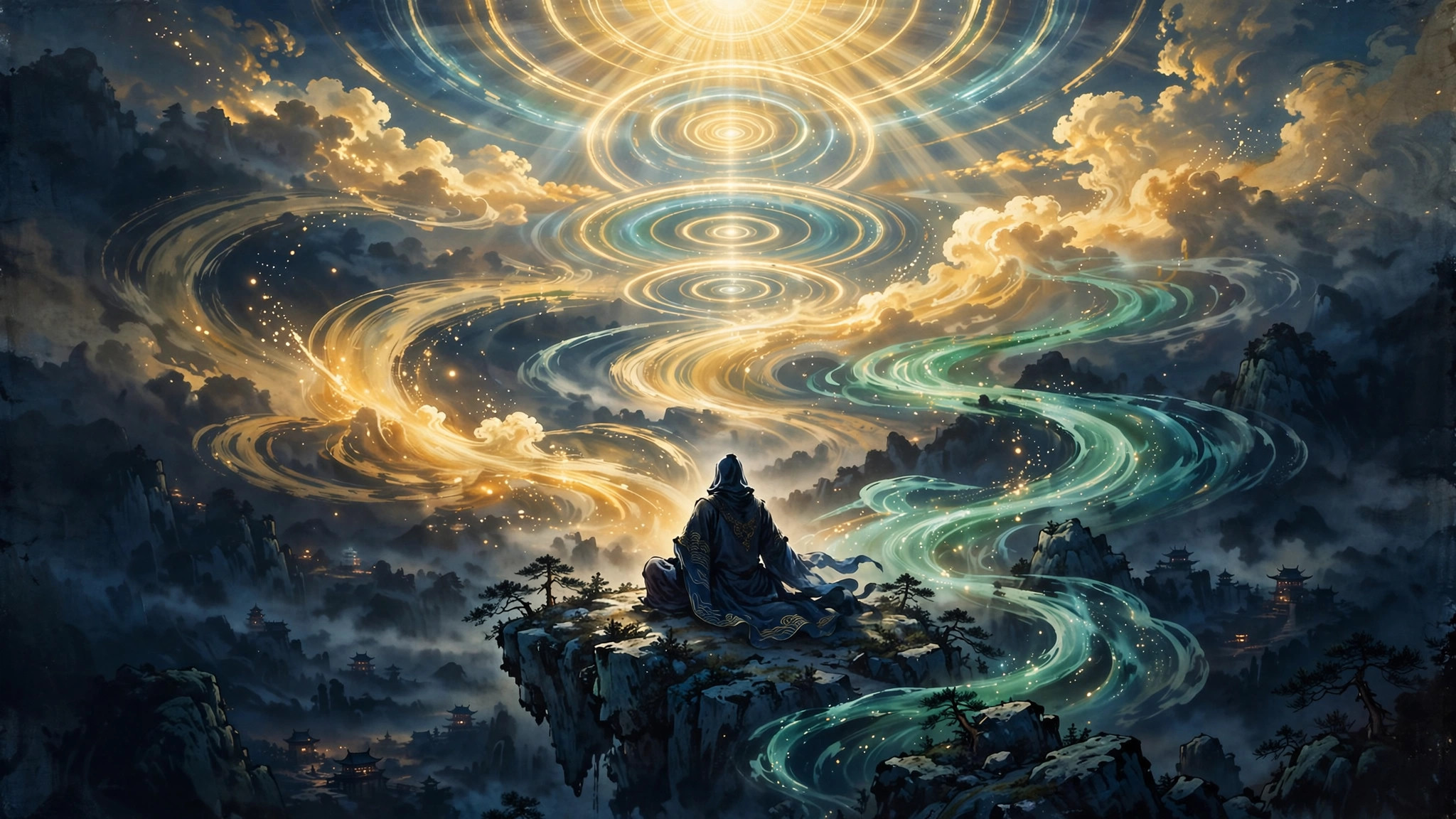
If you've ever read a Chinese cultivation novel, you've seen the same rhythm over and over: the hero trains for years, breaks through a "bottleneck," and suddenly everyone at a lower level can't touch him. Those levels have a name — cultivation realms — and they form the backbone of nearly every xianxia story.
In short, cultivation realms are the stages of power a cultivator passes through on the path from ordinary mortal to immortal. Think of them as the experience levels in a role-playing game: each realm marks a fundamental transformation of the body, the spirit, or both, and the gap between realms is usually so large that cross-realm combat is almost impossible. Once you understand the system, every training arc, tournament, and "young master" face-slap in the genre clicks into place.
Western fantasy has wizards of varying skill, but xianxia makes power measurable. The reason is storytelling, not worldbuilding. A clear ladder of realms lets the author:
This is also why cultivation novels are sometimes called "number-go-up" fiction — the genre wears its progression openly, and readers love it.
There is no single official list — every author tweaks the names — but most xianxia novels use some version of this sequence, which traces back to early Chinese webfiction and, loosely, to Daoist inner-alchemy terminology:
The starting line. The cultivator learns to sense qi (vital energy) in the air, draw it into the body, and circulate it through the meridians. A Qi Condensation cultivator is faster and tougher than a normal person but still very much mortal. Most protagonists begin here.
The first real threshold. Years of accumulated qi are compressed into a solid "foundation" — often described as liquid qi pooling in the dantian, the energy center below the navel. Lifespan doubles or triples, and the cultivator can begin using simple magical tools. In many novels, 99% of cultivators never get past this stage, which is why reaching it is treated as a genuine achievement.
The liquid qi in the dantian condenses into a solid golden core. This is the mark of a true expert in most stories: the cultivator can fly, use powerful artifacts, and live for several centuries. Sect elders and small-sect patriarchs typically sit at this level.
The core "hatches," and a miniature version of the cultivator — the nascent soul — forms inside it. At this realm the cultivator can survive the destruction of their body by escaping in soul form, making them extremely hard to kill. Anyone with a nascent soul is a regional power: the kind of figure kingdoms court and fear.
Names vary wildly here — Deity Transformation, Void Refinement, Body Integration, Mahayana — but the pattern stays the same: each step multiplies power and lifespan by orders of magnitude. The final realms (often called Ascension or Immortal) mark the jump from the mortal world to the immortal realm, which is where many sequels begin.
Most novels cap the mortal world's ladder at six to nine major realms, each subdivided into early, middle, late, and peak stages. Yes — there are sub-levels within the levels. Readers joke about it; authors rely on it.
The single most important rule to internalize: in xianxia, a higher realm almost always beats a lower one, regardless of skill. A late-stage Foundation Establishment cultivator will crush an early-stage one; a Golden Core cultivator treats Foundation Establishment opponents like children.
This is why "breakthrough" scenes carry so much drama. When the hero finally crosses into the next realm mid-fight, it's not a modest stat boost — it's a regime change. And when a protagonist does fight across realms and win, the novel makes sure you know how extraordinary that is. The rarity of the exception proves the rule.
If realms were just a matter of time, everyone would be immortal. Three obstacles keep the ladder steep:
Together, these explain the genre's social order: ancient monsters at the top, ambitious juniors clawing upward, and a vast middle of cultivators who plateaued long ago.
New readers sometimes confuse cultivation realms with the martial-arts rankings of wuxia novels. The difference is one of kind, not degree. Wuxia heroes train their bodies and techniques but remain human — an old master is still mortal. A xianxia cultivator who climbs high enough stops being human at all, gaining centuries of life, a soul that can leave the body, and eventually immortality. If you want the full comparison of the genres, see our xianxia vs wuxia vs xuanhuan breakdown, or start with what xianxia is if the genre itself is new to you.
Strip away the Chinese terminology and the cultivation ladder is one of the oldest pleasures in storytelling: visible, earned growth. Every reader who has ever grinded levels in a video game recognizes the loop — effort in, power out, new horizons unlocked. Xianxia just makes the loop literal, spiritual, and thousand-chapters long.
So the next time a protagonist sits in a cave for three chapters muttering about "touching the barrier of Core Formation," you'll know exactly what's at stake: not just a power-up, but a whole new category of existence — and a whole new set of enemies waiting one rung up.