Article
Xianxia vs Wuxia vs Xuanhuan: What's the Difference?
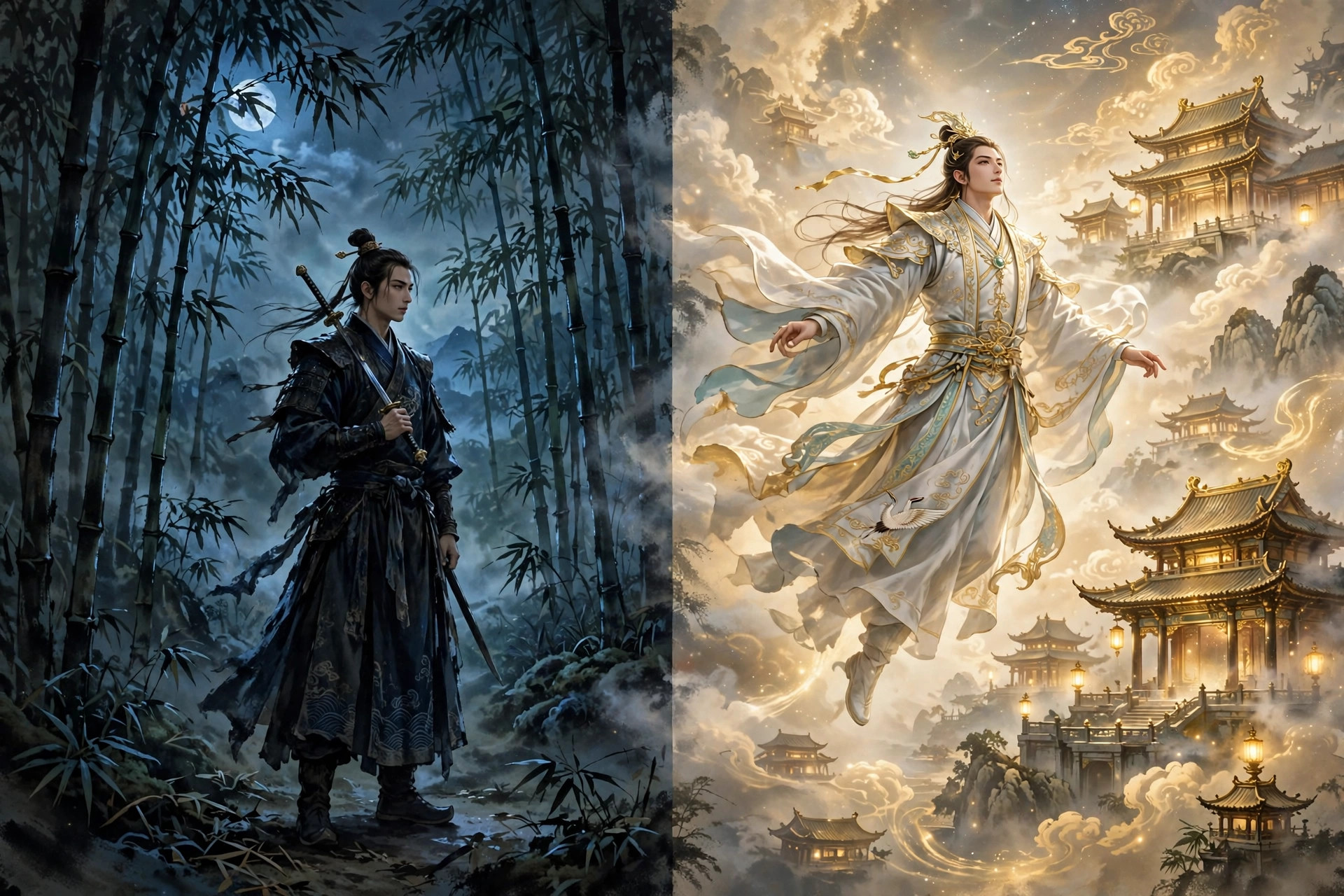
Xianxia, wuxia, and xuanhuan get mixed up constantly by new readers of Chinese fantasy. They share martial arts, Chinese culture, and a love of underdog heroes — but they are distinct genres with different rules. Here's the clearest breakdown you'll find.
Wuxia (武侠, "martial heroes") is the oldest of the three. Its heroes master neigong (internal martial arts) and swordplay that defies physics — leaping across rooftops, fighting dozens at once — but they never become supernatural beings. Nobody flies to heaven; nobody lives for ten thousand years.
Classic wuxia is set in a recognizable historical China (Song, Ming, or Qing dynasties) and centers on jianghu — the "rivers and lakes," a romantic underworld of wandering swordsmen, sects, and codes of honor.
Read wuxia if you like: grounded martial arts, honor codes, historical settings, bittersweet romance.
Xianxia (仙侠, "immortal heroes") takes wuxia's martial world and adds Taoist magic and the pursuit of immortality. The defining mechanic is cultivation (修炼): absorbing spiritual qi to advance through ranked realms — Qi Condensation, Foundation Establishment, Golden Core, Nascent Soul, and beyond.
Key differences from wuxia:
Read xianxia if you like: power progression, magic systems, mythological stakes, thousand-chapter epics.
Xuanhuan (玄幻, "mysterious fantasy") is the broadest label. It started as "Eastern fantasy with Western influences" and became a catch-all for cultivation stories that break xianxia's rules: protagonists with game-like status screens, magic academies, or completely original power systems.
A useful rule of thumb: if a novel has cultivation-style power-ups but doesn't care about Taoist immortality lore, it's probably shelved as xuanhuan.
Read xuanhuan if you like: genre mashups, system/game mechanics, unpredictable worldbuilding.
| Wuxia | Xianxia | Xuanhuan | |
|---|---|---|---|
| Magic? | No (martial arts only) | Yes (cultivation) | Yes (mixed systems) |
| Goal | Justice, honor | Immortality | Varies |
| Setting | Historical China | Mythic China | Original worlds |
| Power ceiling | Peak human | Godlike | Godlike+ |
| Typical length | Standalone novels | 1,000+ chapters | 1,000+ chapters |
Start with wuxia if you want a complete story in one sitting. Start with xianxia if you want the full cultivation-progression experience that made Chinese webnovels famous. Start with xuanhuan if you like litRPG and system-based fantasy.
The genres bleed into each other constantly — many beloved novels mix all three. The labels matter less than finding a story whose power system clicks for you.
New to the whole scene? Start with our beginner's guide to xianxia.