Article
Dantian Explained: The Energy Reservoir Behind Every Cultivator
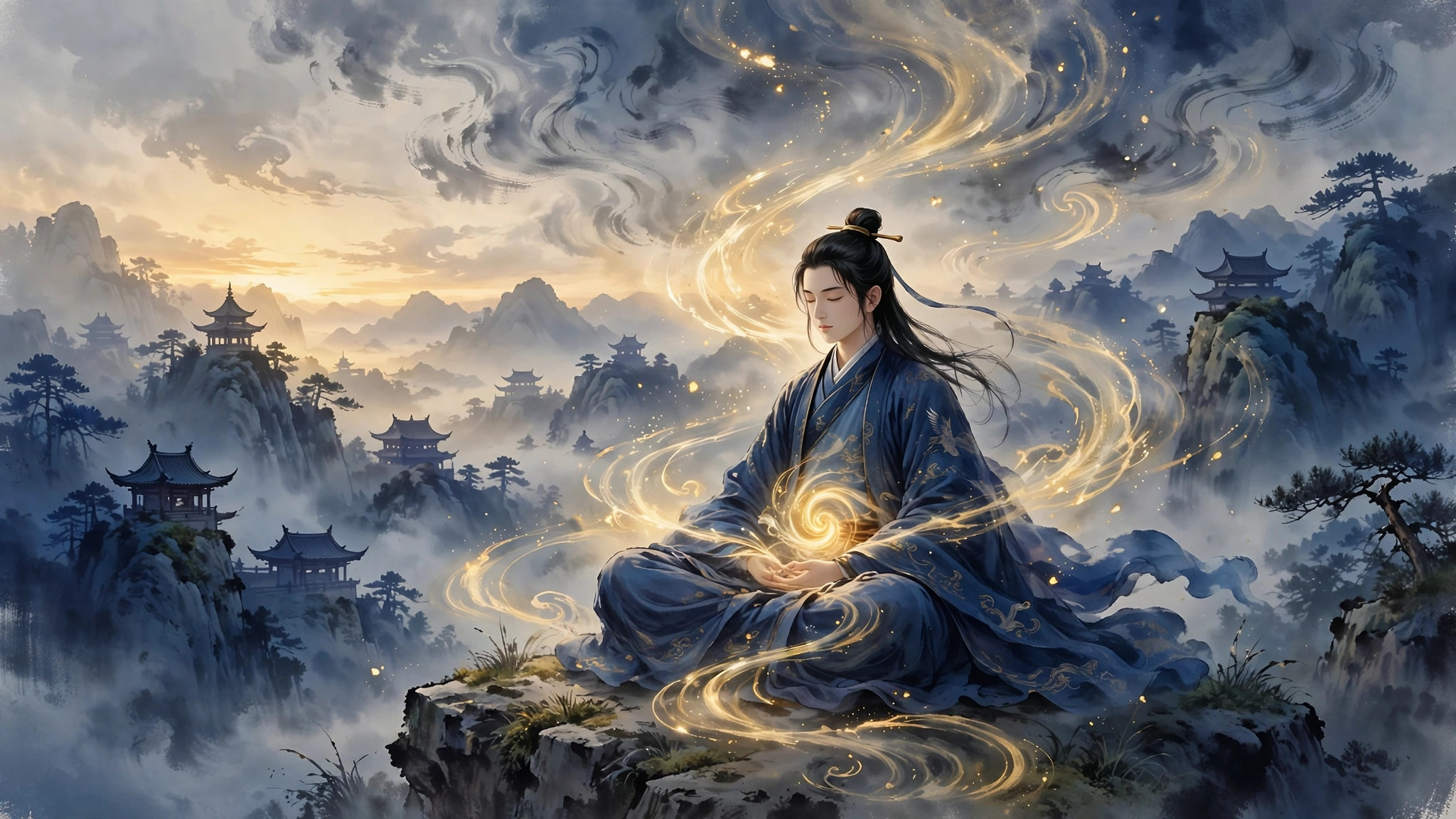
Put three fingers below your navel. That spot — in the lower abdomen, behind the abdominal wall — is where, in every xianxia novel ever written, the most valuable thing a cultivator owns sits hidden: the dantian (丹田), literally the "elixir field."
In xianxia fiction, the dantian is the energy reservoir inside a cultivator's body: the place where qi is gathered, stored, refined, and drawn from to power every technique, breakthrough, and miracle in the story. Think of it as a battery and a furnace in one — the container that determines how much power a cultivator holds, and the refinery that turns raw spiritual energy into usable strength. Damage it, and a hero's cultivation stalls or collapses; shatter it, and they fall back to being an ordinary mortal — one of the cruelest fates the genre has.
Unlike some genre inventions, the dantian is not something webnovel authors made up. The concept comes straight from Taoist inner alchemy and traditional Chinese medicine, where the dantian has been treated as a focal point of the body for centuries. The novels just scaled it up: from a meditation aid to the engine of godhood.
In a cultivation story, qi — the vital energy of heaven and earth — is useless floating around loose. It has to be absorbed, circulated through the body's meridians, and deposited somewhere. That somewhere is the dantian. Every cultivation session in the genre is, at bottom, a deposit into this account: the hero sits in meditation, draws qi from the environment, runs it through breathing and circulation techniques, and banks the refined product in the dantian.
The dantian does three jobs in most novels:
Because everything routes through it, the dantian is also the genre's favorite target. A strike to the dantian in a duel is the cultivation equivalent of a knockout blow, and destroying an enemy's dantian instead of killing them is a signature move of the genre's crueler villains — and, occasionally, its heroes.
Here's something that confuses newcomers: although a novel almost always means the lower dantian when it says "dantian," the term traditionally covers three energy centers along the body's midline. The three dantians are well documented in Taoist and traditional Chinese medicine sources, each associated with one of the "three treasures" of essence, energy, and spirit:
| Dantian | Chinese | Location | Traditional role |
|---|---|---|---|
| Lower | 下丹田 (xià dāntián) | A few finger-widths below the navel | Stores essence (jing) and qi; where refinement begins |
| Middle | 中丹田 (zhōng dāntián) | At the level of the heart | Transforms qi into spirit (shen) |
| Upper | 上丹田 (shàng dāntián) | Between the eyebrows | Seat of spirit; awareness and intuition |
A few details worth knowing. The character 丹 (dān) is the same "dan" as in the elixir pills cultivators are always swallowing — both refer to the refined essence of inner alchemy. The lower dantian is sometimes called the "golden stove," a nod to its role as the body's furnace. And in Japanese the same concept is called tanden (or hara), which martial artists may already recognize as the center of balance and power — one more bridge between the novels and real-world practice.
In fiction, the lower dantian does nearly all the work, and when a character's dantian is "crippled," it's always this one. The middle and upper dantians show up more in high-level cultivation systems, where breakthroughs past a certain point involve opening, linking, or uniting all three centers.
The dantian is not a webnovel invention. It comes from neidan (内丹), Taoist inner alchemy — a tradition of meditation and breathing practice that treats the body as a laboratory for refining the "three treasures": jing (essence), qi (vital energy), and shen (spirit). Practitioners visualize and circulate energy through the dantians to improve health and, in the tradition's loftier claims, extend life.
The same concept anchors qigong, tai chi, and traditional Chinese medicine, where the dantian points serve as focal centers for practice rather than anatomical organs. No surgeon has ever found one, and the tradition doesn't claim it's a physical structure — it's a point of attention, the place a practitioner directs their awareness during breathing exercises.
Xianxia authors borrowed the scaffolding and rebuilt it for drama. The real-world dantian is a subtle meditation aid; the fictional one is a fuel tank that can be measured, expanded, poisoned, sealed, and detonated. The genre kept the vocabulary — jing, qi, shen, meridians, the three centers — and attached hit points to it.
Few things in cultivation fiction carry more dread than a damaged dantian, and the logic is ruthlessly consistent. A cultivator's entire identity — status, safety, lifespan, revenge plots — depends on stored power. Destroy the container and the power drains away or turns on its owner. Fans commonly describe the standard outcomes as a grim menu: cultivation regresses realm by realm, the body withers from backlash, or the victim survives as a cripple in a world full of enemies they made while powerful.
That's why "cripple his dantian" is the genre's signature act of cruelty — worse than killing, because it leaves the victim alive to watch their world collapse. Heroes who suffer it at the start of a story (and many do — it's one of the most popular opening setups in the genre) must rebuild from nothing, which is exactly the underdog engine xianxia runs on. And the rare techniques that can repair a shattered dantian are treated as priceless treasures, driving entire plot arcs.
The mirror image of this disaster is what happens when energy goes wrong inside the body rather than being destroyed from outside — see our explainer on qi deviation.
Is the dantian the stomach? No. It's described as sitting behind the abdominal wall, a few finger-widths below the navel — in the region of, but distinct from, the digestive organs. Mixing it up with the stomach is the most common beginner mistake, and even the Japanese term hara is explicitly not to be translated as "stomach."
Do real people have dantians? In the sense the tradition means it — as a focal point for breathing and attention in qigong and Taoist practice — yes, it's a genuine concept with centuries of history. In the sense the novels mean it — a glowing reservoir of supernatural fuel — no. The fiction is a dramatization, not a report.
Why do some novels mention only one dantian? Because "dantian" unqualified almost always means the lower dantian — the same convention holds in the traditional sources. If a story needs the other two, it names them explicitly.
Can a dantian get too full? In many novels, yes — and this is where breakthroughs come from. When the dantian can no longer contain its refined energy, the cultivator must advance to the next cultivation realm or risk the pressure damaging them from within. The container forces the climb.
The dantian is the genre's answer to a practical question: if cultivators absorb energy from the world, where does it go? It goes into the elixir field — gathered, refined, stored, and spent. Every training montage, every breakthrough, every "his dantian shattered" tragedy in xianxia runs through this one piece of the body's hidden anatomy. Understand the dantian, and the entire power economy of cultivation fiction starts to make sense.