Article
Qi Deviation Explained: What Happens When Cultivation Goes Wrong in Xianxia Novels
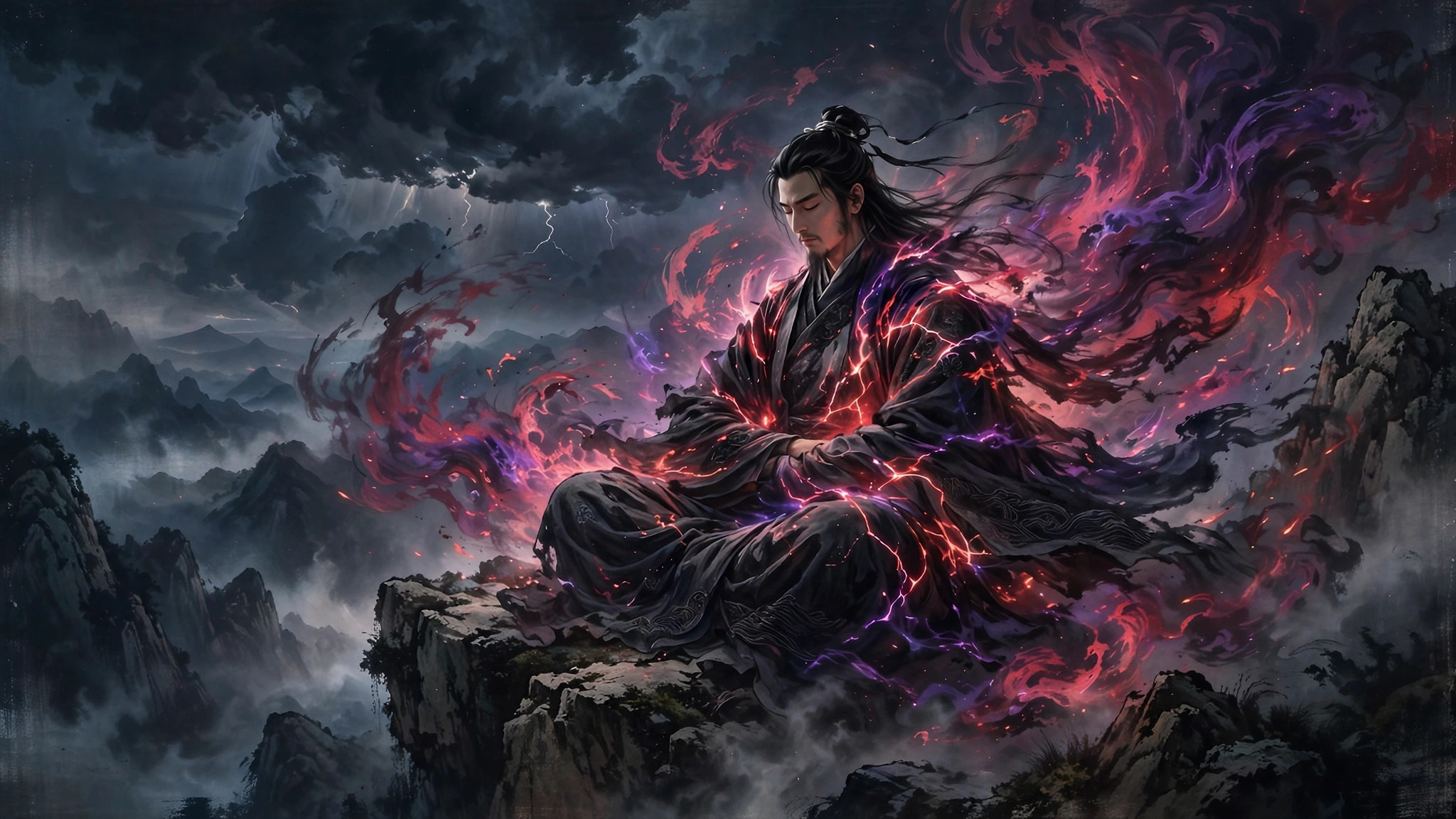
Qi deviation (走火入魔, zǒuhuǒ rùmó — literally "fire entering, demon possessing") is what happens in xianxia novels when a cultivator's energy circulation spirals out of control. Instead of qi flowing smoothly through the meridians, it rages, reverses, or floods the wrong channels, and the cultivator loses control of their body — and often their mind. At best, they vomit blood and lose months of hard-won progress. At worst, they go mad, turn into a bloodthirsty monster, or die sitting cross-legged on their meditation mat.
It's one of the most feared fates in cultivation fiction — not death in battle, but destruction from the inside out, caused by your own power turning against you.
The Chinese phrase breaks into two halves. 走火 (zǒuhuǒ) means the "fire" — the inner energy being guided during cultivation — has gone off its intended path, like a vehicle running off the road. 入魔 (rùmó) means "entering the demonic," describing the state that follows: delusion, frenzy, cruelty, or madness.
Despite the word "demon," no actual demon is required. The "demon" is a metaphor for the cultivator's own corrupted energy and unhinged mind. In wuxia and xianxia stories alike, rumo describes someone whose inner state has tipped into obsession or madness, whether through failed cultivation, grief, or consuming rage.
Qi deviation is rarely random. Authors use it as the price of doing something reckless, and the causes are remarkably consistent across novels:
Forced breakthroughs. The most common cause. A cultivator tries to break through to the next realm before they're ready — under pressure from an enemy, a deadline, or pure arrogance. The body can't handle the surge of energy, and the meridians rupture or the qi runs wild. (See our guide to cultivation realms for why each breakthrough is so dangerous.)
An unstable foundation. Years of relying on pills, shortcuts, or stolen power instead of steady practice leave a cultivator's control over their qi fragile. When real pressure comes, the foundation cracks.
Heart demons (心魔, xīnmó). Guilt, regret, obsession, or trauma can fester into a "heart demon" — a psychological wound that hijacks the cultivator's mind mid-breakthrough. The qi follows the mind's chaos, and chaos is what you get. This is why many novels emphasize cultivating the heart and resolving worldly attachments, not just the body.
Wrong or incomplete techniques. Practicing a stolen manual with missing pages, or a technique unsuited to your physique, is a classic setup. The energy goes somewhere it shouldn't, and there's no way back.
Outside interference. A sneak attack during meditation, a poison slipped into a pill, or a rival deliberately disrupting a breakthrough can all trigger deviation. This is why powerful cultivators always have a trusted guardian standing watch during secluded training.
Authors love the drama of qi deviation, so the symptoms are vivid and escalating:
The horror comes from the helplessness. Everyone around the victim can see what's happening but almost nothing can be done once it's past the point of no return.
New readers often confuse the two, since both involve a cultivator convulsing under terrible forces. The difference is simple: heavenly tribulation comes from outside; qi deviation comes from within.
A heavenly tribulation is a trial imposed by the heavens — lightning, karmic fire, inner-demon illusions sent by fate itself — striking at the moment of advancement. Qi deviation needs no heavens at all: it's what happens when your own energy, your own mind, your own impatience betray you. A cultivator can dodge no tribulation, but qi deviation is almost always their own fault — which is exactly why it makes such good storytelling.
Since deviation is usually self-inflicted, the genre has developed a whole toolkit for avoiding it:
Recovery is deliberately slow and costly. Authors rarely let a character bounce back in a chapter, because the consequence is the point: it keeps breakthroughs tense and makes every rushed decision meaningful.
"Qi deviation" is one of those phrases that ambushes a new reader mid-chapter: one page the hero is meditating peacefully, the next he's coughing blood and his master is shouting "he's deviated!" with genuine panic. It's dramatic, it's memorable, and it's completely unlike anything in Western fantasy — which is why it sends so many curious readers to Google.
Understanding it also unlocks a whole layer of the genre. Once you know what deviation is, you start noticing the discipline underneath the spectacle: the emphasis on patience, on mental clarity, on respecting the process. Xianxia heroes don't just get stronger — they earn the right to handle their own power. Qi deviation is the reminder that power without control is a death sentence.