Article
Heavenly Tribulation Explained: Why Cultivators Get Struck by Lightning
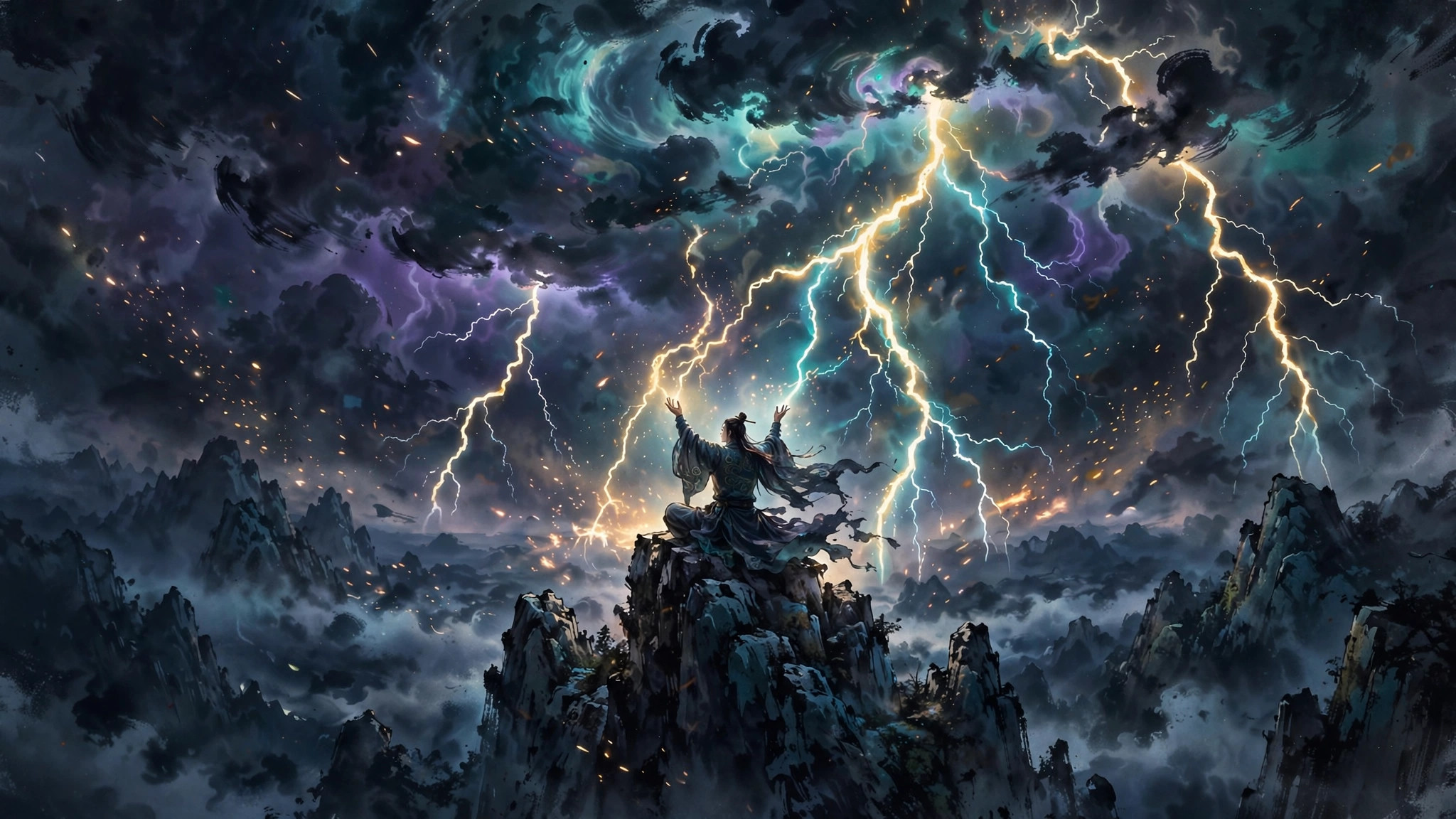
If you've been reading a cultivation novel for a while, you've seen this scene: the protagonist sits cross-legged on a mountaintop, dark clouds gather out of a clear sky, and enormous bolts of lightning come crashing down on him — for hours. His friends watch from a safe distance. This is not bad weather. It's a heavenly tribulation.
In short, a heavenly tribulation (天劫, tiānjié) is a trial sent by the heavens to test a cultivator at key moments of advancement. It usually takes the form of devastating lightning, and surviving it is the price of admission to the next level of power. Fail, and you die, lose your cultivation, or are crippled for life.
To understand the tribulation, you need to understand one core idea of the genre: cultivation goes against the natural order. Ordinary mortals live, age, and die. Cultivators refuse that deal. They absorb the spiritual energy of heaven and earth, extend their lives by centuries, and eventually aim to become immortal beings that the universe cannot control.
The "heavens" (Heavenly Dao) notice this. In most xianxia settings, the universe has a kind of immune system, and a cultivator growing too powerful is treated like a foreign body. So when a cultivator reaches a major breakthrough — especially the jump from mortal to immortal — the heavens send down a tribulation to test whether the cultivator deserves to keep defying them. Think of it as a graduation exam where failure is fatal.
This logic is why tribulations almost always appear at dramatic moments. The lightning isn't random; it's the story's way of asking: "Has this character earned the next level?" That's why heroes face their tribulation alone — having someone else help is often shown as cheating, and the heavens respond by making the tribulation even worse.
The most iconic form is tribulation lightning. Dark tribulation clouds roll in, the sky turns unnaturally black, and lightning bolts strike the cultivator in waves. The details vary by novel, but the common elements are:
One important rule across almost all xianxia: you cannot run away. Tribulation clouds follow their target. Fleeing only guarantees you'll face the lightning exhausted and alone, somewhere far from help.
Not every breakthrough triggers one. Most authors reserve tribulations for the milestones that matter — the big cultivation realms where the nature of the cultivator fundamentally changes:
Minor breakthroughs within a realm (like early-stage to mid-stage) usually just involve meditation and resources. The tribulation is reserved for moments where the heavens genuinely take notice.
Authors love this question because preparation montages are great drama. Common strategies include:
Tempering the body in advance. Since the lightning attacks the body first, cultivators train their physical resilience through body-refining techniques, rare medicines, or bathing in lightning-flavored spiritual springs. The logic is simple: become tough enough that the lightning reforges you instead of killing you.
Artifacts and formations. Defensive treasures, armor forged from rare metals, and protective arrays laid out beforehand can absorb part of the strike. But there's usually a catch — the tribulation grows stronger if it senses the cultivator is relying too heavily on outside help, and a formation that fails mid-tribulation is worse than no formation at all.
Pills and recovery. Healing elixirs and qi-restoring pills are consumed between waves. The classic scene is the hero swallowing a glowing pill while the next wave of lightning gathers, getting back on his feet just in time.
The Dao heart. This is the genre's philosophical core. Tribulation lightning strikes the body, but heart demons strike the mind — and no artifact protects against those. A cultivator whose resolve wavers, who doubts their path or clings to regret, dies from the inside. The novels are explicit about the moral: you must know who you are before the heavens ask.
Surviving a tribulation is never just "not dying." The lightning reforges the cultivator:
Failed tribulations are darker. Depending on the novel, the cultivator's body is destroyed (with the soul sometimes escaping to start over), their cultivation base is shattered and they become mortal again, or they linger as a crippled shell of their former self. Authors use failed tribulations to raise the stakes: when the hero's master mentions the friend who didn't make it, the reader understands exactly what's on the line.
The heavenly tribulation is one of xianxia's most beloved devices because it solves a storytelling problem elegantly. In a genre where heroes train for hundreds of chapters, the author needs a ceremony for each transformation — something more dramatic than "he meditated and got stronger." The tribulation is that ceremony: a public, spectacular, life-or-death exam that the whole world can watch from a safe distance.
It's also deeply rooted in the genre's philosophy. Xianxia is built on Taoist ideas about defying fate, and nothing embodies that defiance like standing on a mountaintop, pointing at the sky, and daring the heavens to do their worst. Every tribulation scene is really asking the same question the genre asks on every page: what is a mortal willing to pay to stop being one?
So the next time the sky turns black in your novel and the lightning starts falling in waves, you know what you're watching — not a storm, but a job interview with the universe.