Article
What Is Karma in Xianxia? Cause, Effect and the Debts That Follow a Cultivator
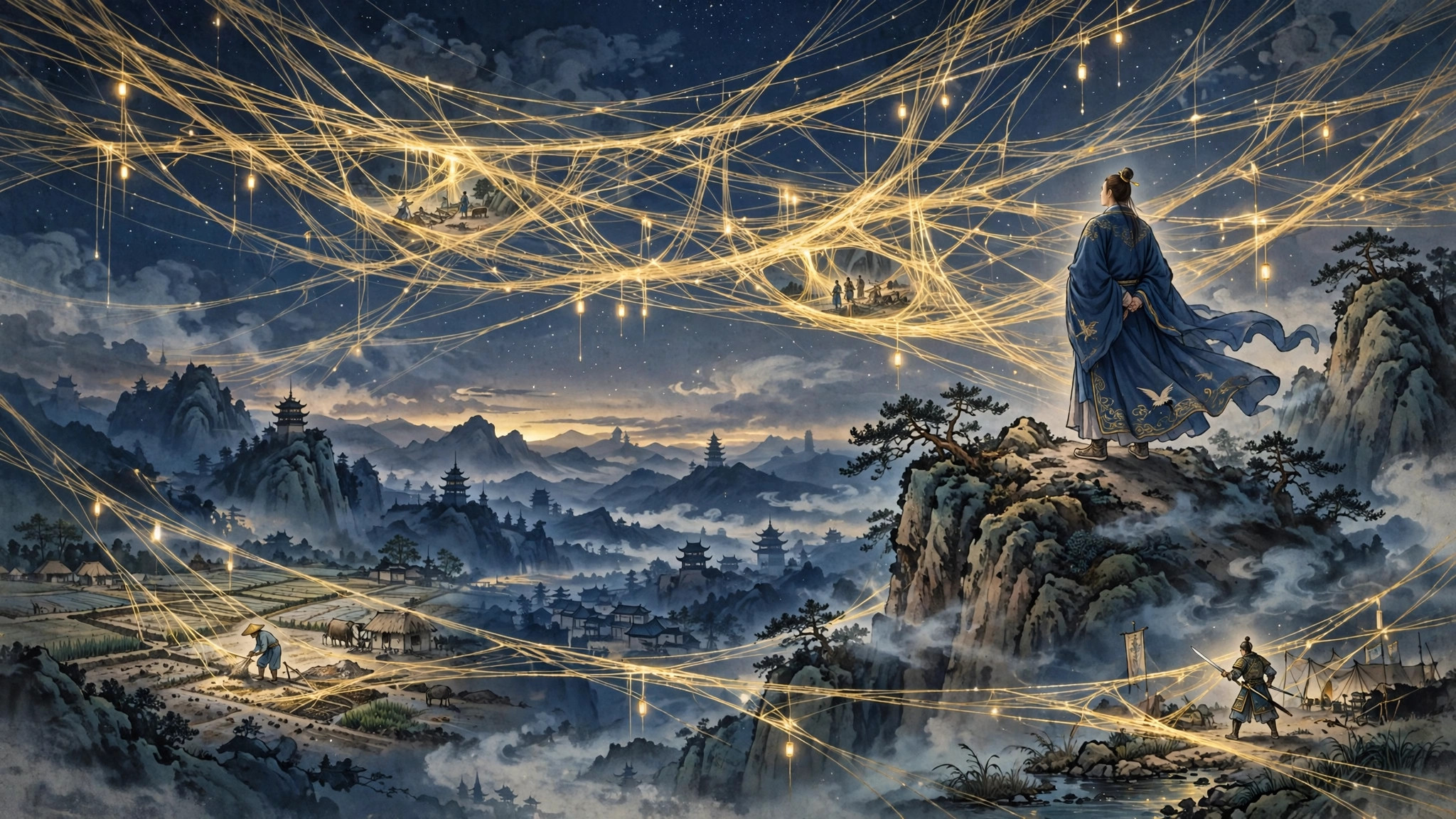
Every cultivator in xianxia keeps two ledgers, and only one of them is written in spirit stones. The other is invisible, has no owner, and never forgets. *Karma in xianxia — 因果 (yīnguǒ), literally "cause and fruit" — is the law that every action plants a seed, and every seed eventually ripens into a consequence.* Save a stranger's life and the universe owes you a kindness; murder an innocent and the debt comes due, sometimes in this life, sometimes in the next, sometimes at the worst possible moment of a breakthrough.
New readers often treat karma as the genre's version of luck, or as a vague moral warning. It is more mechanical than that. In these stories karma behaves like a physical law — impersonal, exact, and impossible to bribe — and the smartest characters plan around it the way a general plans around weather. This guide explains what the word actually means, where it comes from, how novels use it as a plot engine, and why the strongest cultivators in the genre are terrified of owing anyone anything.
The Chinese word is 因果 (yīnguǒ), and the two characters spell out the whole idea. 因 (yīn) means "cause" or "reason," and 果 (guǒ) means "fruit" or "result." Put together, the word is "cause and fruit": an action is a seed, and the consequence is the fruit that grows from it. The term is a calque of the Sanskrit hetu (cause) and phala (fruit), carried into Chinese with the translation of Buddhist texts — Wiktionary notes exactly this origin, and the Buddhist sense of the word, "karma; fate," sits alongside the everyday meaning of plain cause and effect.
The longer phrase fans will meet constantly is 因果报应 (yīnguǒ bàoyìng), "karmic retribution": good and evil deeds repaid in kind. The word 报应 (bàoyìng) adds the idea of return — the fruit comes back to the one who planted the seed. It is the proverb behind a thousand xianxia scenes: the arrogant young master who bullies a nobody in chapter ten is the same young master whose clan is destroyed by that nobody in chapter nine hundred, and the story treats the connection as inevitable rather than coincidental.
There is a second, more technical word worth knowing: 业 (yè), from the Sanskrit karma itself. Where 因果 describes the whole chain of cause and effect, 业 names the karmic load a person carries — the accumulated weight of their deeds. In Buddhist teaching, the word karma literally means "action" or "doing," but it refers specifically to action driven by intention. Wikipedia's article on karma in Buddhism puts it plainly: karma is action driven by intention (cetanā) that leads to future consequences, and the Buddha's own formulation in the Nibbedhika Sutta (Anguttara Nikaya 6.63) is blunt — "Intention, I tell you, is kamma. Intending, one does kamma by way of body, speech, and intellect." The intention matters more than the outward act, which is why a killing done in cold cruelty and a killing done to protect the innocent carry very different karmic weight in these stories, even when the bodies look the same.
The most common misunderstanding new readers bring to xianxia karma is picturing it as a cosmic scorekeeper — some heavenly accountant rewarding the good and punishing the wicked. The Buddhist understanding that the genre borrows is closer to gravity. Karma operates, in the words of the Wikipedia article, "like the laws of physics, without external intervention, on every being in all six realms of existence including human beings and gods." Nobody administers it. Nobody can appeal it. It simply ripens.
That impersonality is what makes karma so useful to novelists. A villain does not need to be struck down by a hero to get their punishment — the story can let their own choices do it. A sect that massacres a village for a treasure will, chapters later, find its disciples turning on each other and its elders dying in tribulation. The narration will not always say "this happened because of karma." It does not have to. Readers who know the word feel the connection, and the author gets a form of justice that feels earned rather than imposed.
If karma is the law, karmic debt is the ledger entry, and in xianxia it is a practical problem, not just a moral one. A cultivator who owes a life, a favor, or a blood debt carries that debt into every breakthrough. The Heavenly Dao — the impersonal order of the universe that governs cultivation itself — does not forgive unpaid accounts. This is why the genre is full of characters who refuse help, refuse gifts, and refuse to be saved: accepting a favor creates a thread of karma between two people, and a thread is something that can be pulled.
The pattern shows up in a few recognizable forms:
The life debt. A protagonist saves a powerful stranger, or is saved by one, and the story marks it. The saved party will insist on repaying the debt, sometimes across entire story arcs, because an unpaid life debt is a crack in their cultivation. In many novels, a cultivator who tries to break through while carrying a heavy unpaid debt will find their heavenly tribulation striking harder — the lightning, fans commonly say, is the universe collecting what is owed.
The favor that becomes a chain. A character does a small kindness for a beggar, a dying beast, or a forgotten spirit — and centuries later, that kindness returns as a guardian, an inheritance, or a warning that saves their life. The genre loves this shape because it rewards the protagonist's decency without making decency cheap. The fruit ripens late, which is exactly how karma is supposed to work.
The debt that cannot be repaid. Some debts have no clean settlement. Kill a man's entire clan and no apology or gift fixes it; the only resolution is the killer's death, or the victim's forgiveness — and forgiveness is rarer than revenge in these stories. When a novel wants a villain to be truly doomed, it gives them a debt of this kind. When it wants a hero to be truly interesting, it gives them one too, and then makes them live with it.
Severing karma. Advanced cultivators in many novels speak of "severing karma" (斩因果) — cutting the threads that tie them to other people, places, and past lives, so that nothing can hold them back from ascension. But the stories are usually ambivalent about it: a character who severs every bond may reach the peak, but they arrive there alone, and the novel will ask whether the climb was worth the cutting.
For readers, karma is worth understanding because it explains so much of what otherwise looks like coincidence. The random beggar who turns out to be a hidden expert. The enemy who keeps escaping death until the hero is strong enough to kill them properly. The treasure that falls into the protagonist's lap at the exact moment they need it. In a story with karma, these are the fruit of seeds planted chapters ago, and attentive readers can trace them backwards.
It also explains the genre's distinctive moral physics. Western fantasy often treats goodness as a choice a hero makes and then moves on from. Xianxia treats goodness as an investment with a real, if delayed, return — and cruelty as a loan with ruinous interest. That is why the "arrogant young master" trope works as more than a punching bag: his arrogance is not just a character flaw, it is a karmic liability, and the reader's satisfaction when he falls is the satisfaction of watching a debt get collected. The genre's justice is slow, but it is presented as certain, and that certainty is a large part of its comfort.
There is a practical reading benefit too. When a translation drops the word "karma" or "karmic debt" into a scene, it is usually flagging something. The author is telling you that this moment will matter later, that a thread has been tied, and that you should remember who owes whom. Keeping a rough mental ledger — who saved whom, who betrayed whom, who swore what oath — turns a thousand-chapter epic from a blur of fights into a web of obligations you can actually follow.
Karma will keep appearing in your reading, and now you have a way to read it. When a character refuses a gift, ask what thread they are avoiding. When a villain's plans collapse for no visible reason, look for the seed planted a hundred chapters earlier. When a hero's breakthrough stalls, check whether they are carrying an unpaid debt — a life owed, a promise broken, a wrong unrighted. And when a novel shows you a character severing their karma to reach the peak, notice what the story thinks of the price, because the author's verdict on that bargain tells you more about the book's heart than any fight scene will.
Every action in xianxia is a seed, every consequence a fruit, and the harvest always comes — in this life, in the next, or centuries later. The cultivators who understand that do not stop acting. They just stop acting carelessly. In a genre where a single choice can echo across reincarnations, that is the closest thing to wisdom the road to immortality offers.