Article
What Is Closed-Door Cultivation in Xianxia? Seclusion, Breakthroughs and Time Skips Explained
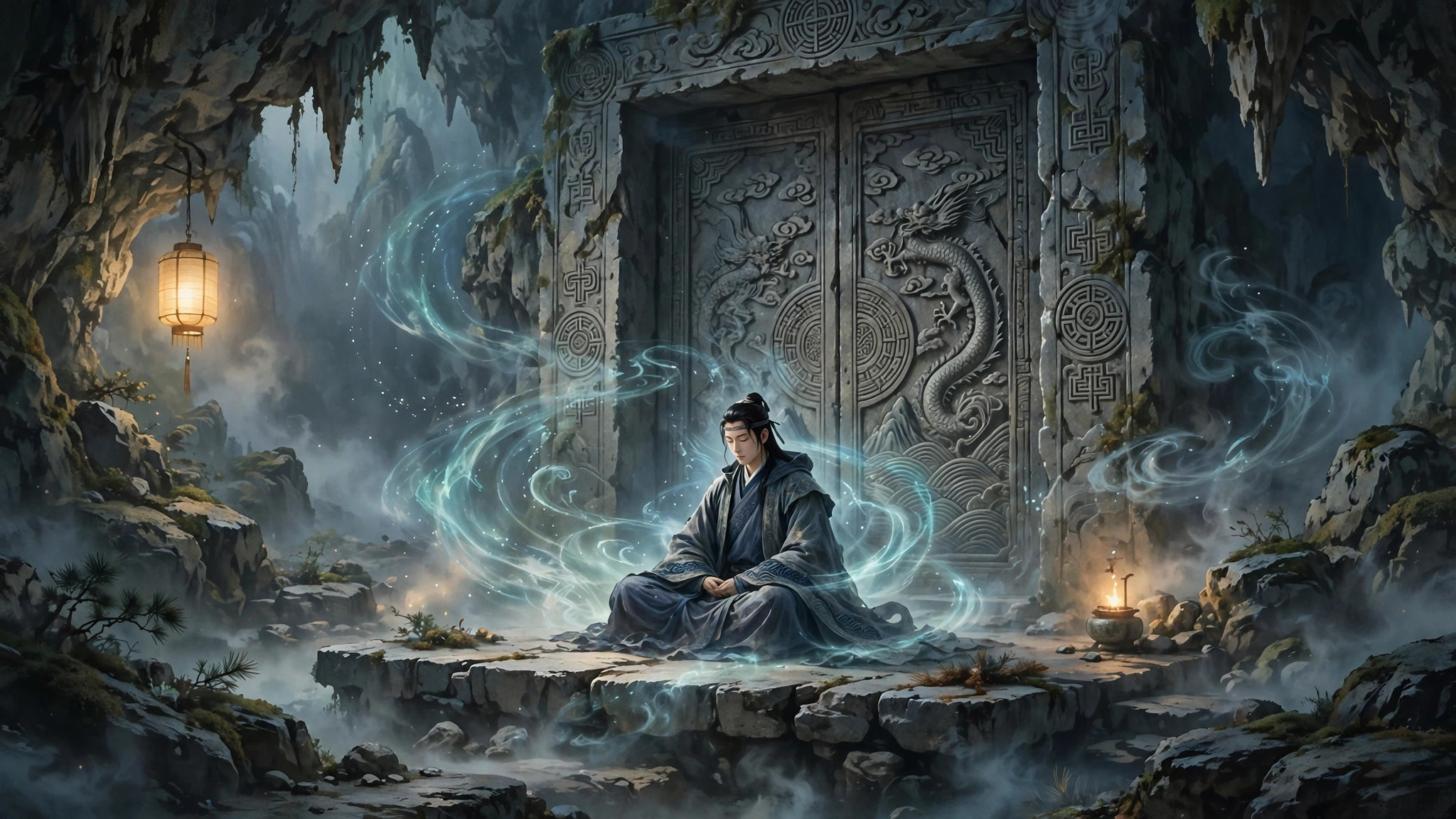
Every few dozen chapters, a xianxia hero simply disappears. One chapter they are trading insults with a rival elder; the next, someone announces they have "entered seclusion," a stone door grinds shut, and the story moves on without them for months or years. When the door finally opens, they walk out stronger, calmer, or occasionally half-dead. This is closed-door cultivation, one of the genre's most reliable rhythms — and once you recognize it, you will start spotting it everywhere.
*Closed-door cultivation (闭关, bìguān) is training done in deliberate seclusion.* The widely used Wuxiaworld glossary of genre terms defines it as training in seclusion, usually undertaken to focus on breaking through a bottleneck, or to avoid being distracted at a crucial moment and suffering a backlash as a result. In plain terms: the cultivator locks themselves away, cuts off contact with the outside world, and does nothing but cultivate until they either succeed or give up. Fans commonly use the phrases "closed-door training" and "closed-door meditation" for the same practice.
Seclusion is not a holiday. Characters retreat behind a closed door for a handful of recurring reasons, and knowing them tells you a lot about what is about to happen in the story.
The most common reason is a bottleneck. Cultivation in these novels is not a smooth slope; it is a staircase with long flat stretches and sudden, stubborn steps between realms. A cultivator can accumulate spiritual energy for years and still fail to cross into the next realm. At that point, ordinary training stops working, and the only remaining option is to shut out every distraction and throw everything at the barrier at once. This is the classic setup for a breakthrough chapter.
The second reason is recovery. After a serious injury, a damaged foundation, or a brush with qi deviation, a cultivator may need months of undisturbed rest and slow repair. Seclusion keeps enemies, well-meaning visitors, and sect politics away while the body and spirit knit themselves back together.
The third reason is study. A cultivator who has just obtained a new technique, a fragment of an ancient manual, or a sudden insight into the Dao needs uninterrupted time to digest it. Trying to comprehend a profound technique while also attending sect meetings and fending off challengers is a recipe for misunderstanding it — or worse, for practicing it wrong.
Finally, there is hiding. Sometimes the closed door is less about training and more about survival: a cultivator who has offended someone powerful, stolen a treasure, or become a target may vanish into seclusion until the heat dies down. In these cases the door is a shield as much as a classroom.
Despite the name, closed-door cultivation rarely involves an ordinary room. The setting itself is part of the ritual, and novels return to a few favorite versions.
The most iconic is the cave dwelling: a chamber carved into a mountain, often on a spot where spiritual energy runs thick. Powerful cultivators hollow out their own caves and protect them with formation arrays that block intruders, muffle sound, and sometimes even slow or speed up the flow of time inside. A closed door here is literal — a slab of stone that seals the entrance until the cultivator chooses to open it.
Sects usually provide seclusion chambers for their disciples: purpose-built rooms in quiet corners of sect territory, sometimes rented by the month and stocked with spirit stones, pills, and clean water. The quality of the chamber often reflects the cultivator's status. An outer disciple gets a bare stone cell; a core disciple gets a chamber sitting directly on a spirit vein.
Rules during seclusion are strict, and breaking them is a serious offense. Visitors are turned away, messages go unanswered, and in many novels, disturbing a cultivator mid-seclusion is treated as attempted murder — because, in story terms, it nearly is. A sudden interruption at the wrong moment can scatter gathered energy, ruin a breakthrough, or trigger a backlash that cripples the cultivator. That is why the door is guarded, sealed with arrays, and sometimes watched over by a trusted friend or a sect elder.
Time inside seclusion is elastic. A short retreat might last days; a long one can stretch to decades or even centuries for the most powerful immortals. This elasticity is deliberate. For a mortal character, a ten-year seclusion means missing weddings, funerals, and wars. For an immortal, ten years is a long weekend. The gap between those two experiences is one of the genre's quiet tragedies, and authors use it often.
If closed-door cultivation were safe and reliable, every cultivator would simply lock themselves away until they became invincible. It is not, and the risks explain why characters hesitate before shutting the door.
The first risk is failure. Most attempts to break through a bottleneck fail. The cultivator emerges weeks later exhausted, their resources spent, and no stronger than before. Repeated failure can damage confidence and, in some novels, the cultivation foundation itself.
The second risk is qi deviation. Pushing huge amounts of energy through the body in a state of intense concentration leaves little margin for error. A stray thought, a flawed technique, or a hidden injury can send the energy out of control. Our explainer on qi deviation covers what happens next, but the short version is: the body rebels, the mind fractures, and the cultivator may end up weaker, mad, or dead.
The third risk is the heart demon. Long isolation gives a cultivator nothing but their own thoughts for company, and unresolved guilt, fear, or obsession tends to surface at exactly the worst moment — usually just as the breakthrough is within reach. Many novels treat the heart demon as the true final boss of any seclusion.
The fourth risk is simply the world moving on. Allies grow old, enemies grow strong, and sects fall while the cultivator sits in a cave. Returning from a long seclusion to find everything changed is one of the genre's most bittersweet scenes: the power gained is real, but so is everything lost in the meantime.
From a storytelling standpoint, closed-door cultivation is a remarkably useful device, and recognizing its jobs makes the genre more enjoyable.
First, it is a time skip with an excuse. Rather than narrating ten uneventful years of meditation, the author shuts the door and reopens it when something interesting happens. The reader skips the grind and arrives at the payoff.
Second, it justifies power jumps. A hero who trained on-screen for every small gain would slow the story to a crawl. Seclusion lets the author say, in effect, "trust me, they worked hard in there," and return a character who can credibly face the next tier of enemies.
Third, it resets the board. While the hero is away, rivals scheme, new factions rise, and old friends change. The hero's return becomes a dramatic re-entry: a stranger walking back into a world that has rearranged itself.
Fourth, it builds anticipation. Announcing a seclusion is a promise to the reader. Something will be different when the door opens, and the question of what — a breakthrough, a failure, a new technique, a changed personality — keeps readers turning pages through the chapters in between.
Not every seclusion is equal, and experienced readers learn to read the signs. A short, calmly announced retreat before a tournament usually ends in a modest breakthrough and a satisfying fight. A desperate, last-minute seclusion after a humiliating defeat usually ends in either a spectacular breakthrough or a spectacular disaster, with little middle ground. A seclusion announced with ominous music — a character calmly settling their affairs, saying goodbye to friends, and sealing the door with their strongest array — is the author telling you to brace yourself.
Pay attention, too, to what the character takes inside. Spirit stones and pills suggest a grind. A mysterious manual suggests a new technique is coming. Nothing at all suggests either supreme confidence or total despair, and the story will enjoy making you guess which.
The next time a character you like announces they are entering seclusion, do not skim past it. The closed door is one of xianxia's oldest promises: someone goes in ordinary, and someone else — stronger, stranger, or scarred — comes out. The fun is in waiting to find out which.