Article
Demonic Cultivation Explained: The 魔道 Path in Xianxia
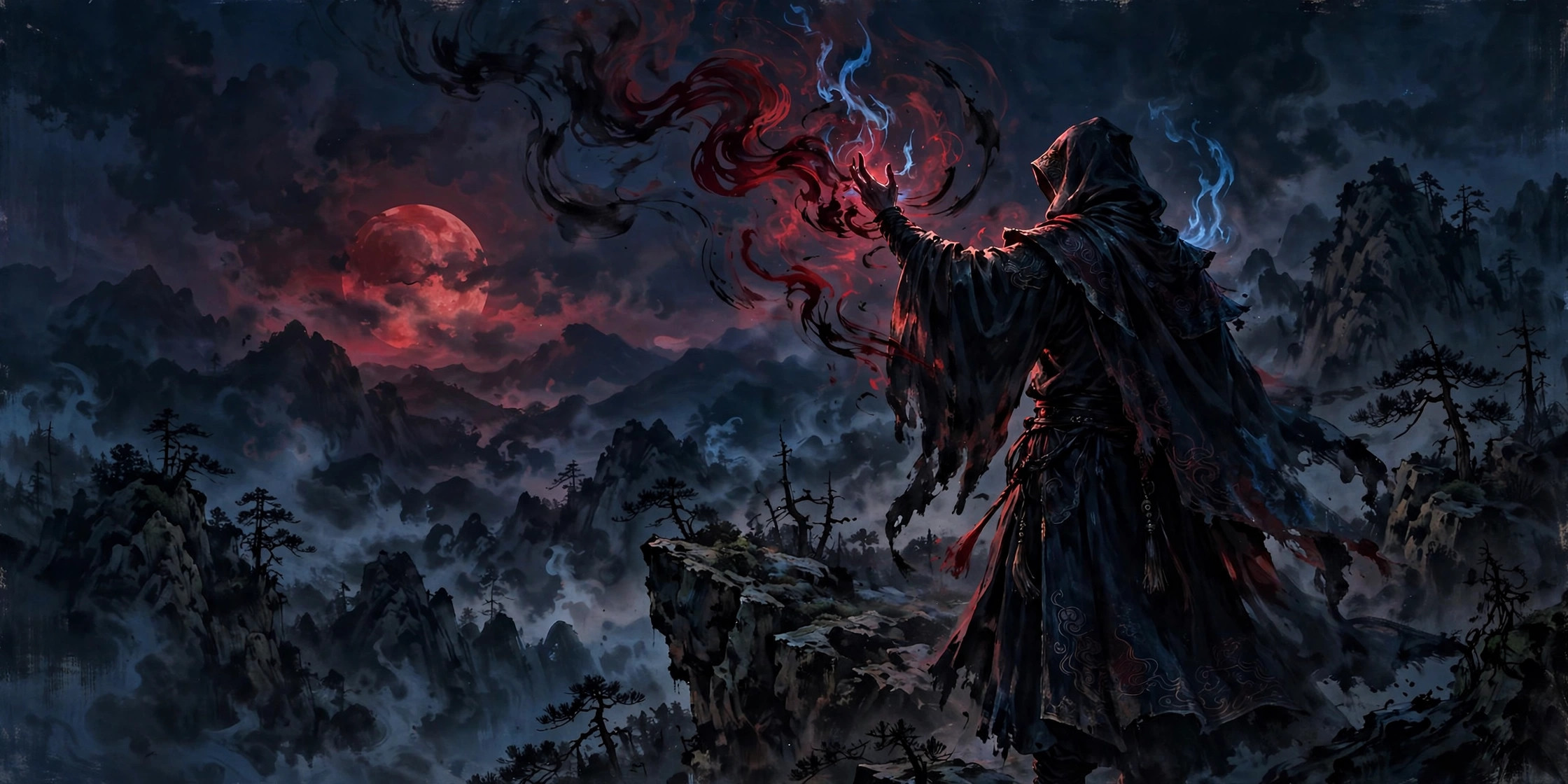
Demonic cultivation (魔道, mó dào — literally "demonic path") is a style of cultivation in xianxia fiction that gets its power from sources orthodox cultivators consider corrupt: resentful energy, dead spirits, blood essence, or the suffering of other beings. Where normal cultivation is about refining oneself and harmonizing with the natural flow of qi, demonic cultivation is about grabbing power quickly through domination of forces most people would rather avoid.
The tradeoff is the entire point of the trope. The demonic path is almost always depicted as faster and more explosive than orthodox cultivation — a cultivator can leap across realms in years that would take a righteous peer decades. But the power is unstable, the methods invite qi deviation, and heavenly tribulation tends to hit demonic cultivators far harder, because the heavens themselves disapprove. Understanding demonic cultivation means understanding that tension: enormous short-term gain against a long-term bill that always comes due.
Fans and authors use the term loosely, but demonic cultivation generally involves one or more of the following, all described here in broad terms rather than as instruction:
None of these are instructions — they're storytelling devices, and authors deliberately keep the mechanics vague. What matters narratively is that the cultivator is drawing on someone else's misery or death rather than on their own discipline. That boundary is what makes a path "demonic" even when the person walking it isn't evil.
The hatred isn't just moral posturing; it has reasons rooted in how the xianxia world works. First, demonic cultivation is seen as a cheat against the natural order. Orthodox cultivation claims legitimacy from the idea that power should be earned through gradual self-improvement — so someone who skips ahead by harvesting resentment feels like a counterfeiter, regardless of the results.
Second, the methods genuinely terrify people. A demonic cultivator's strength is tied to things the righteous world fears: the dead, curses, plagues of resentment. Even a harmless demonic cultivator gets treated as a walking hazard, because one slip in control could unleash a disaster on everyone nearby.
Third, there's politics. Righteous sects built their authority on the claim that only their path is legitimate. A thriving demonic cultivator threatens that monopoly, so persecution doubles as brand protection. This is why in many stories the line between "demonic cultivator" and "person the sects decided to call demonic" is suspiciously flexible.
Demonic cultivation's speed is real, but xianxia as a genre is deeply suspicious of free power, and the costs show up reliably:
Authors use this cost structure deliberately: it lets a demonic-path protagonist be sympathetic — they're paying for their power in loneliness and pain — while keeping them an underdog against the established order.
This is the part that trips up new readers. In older wuxia, the demonic sect was simply the bad guys' faction. Modern xianxia and danmei-era fiction have complicated the picture considerably, and today you'll meet several distinct types:
The key insight for new readers: in modern fiction, "demonic cultivator" is closer to a technical classification than a moral one. It describes how you cultivate, not who you are. A novel's most compassionate character can walk the demonic path, and its most sadistic villain can be a perfectly orthodox sect leader.
A few related words get used interchangeably in translations, and they're worth separating:
Translators sometimes render 魔道 as "the demonic way," "the devil's path," or simply "demons' path." They all point to the same concept: cultivation that draws on forbidden, corrupting power sources.
Demonic cultivation keeps showing up because it solves a storytelling problem. A protagonist who follows the rules and grinds upward level by level can feel slow; a protagonist who finds a dangerous shortcut is immediately interesting, immediately in danger, and immediately in conflict with the world around them. The trope gives authors a built-in engine for tension: power now, consequences later, and a whole society that wants you dead.
It also lets fiction ask a question that resonates beyond the genre. When the "righteous" clans in a story burn villages and manipulate the public while condemning the demonic path, readers start to wonder whether legitimacy was ever about virtue — or just about who writes the history. The best demonic-cultivation stories are never really about the techniques. They're about who gets to decide what counts as good.