Article
What Is a Martial Soul? Wuhun, Soul Rings and Spirit Masters Explained
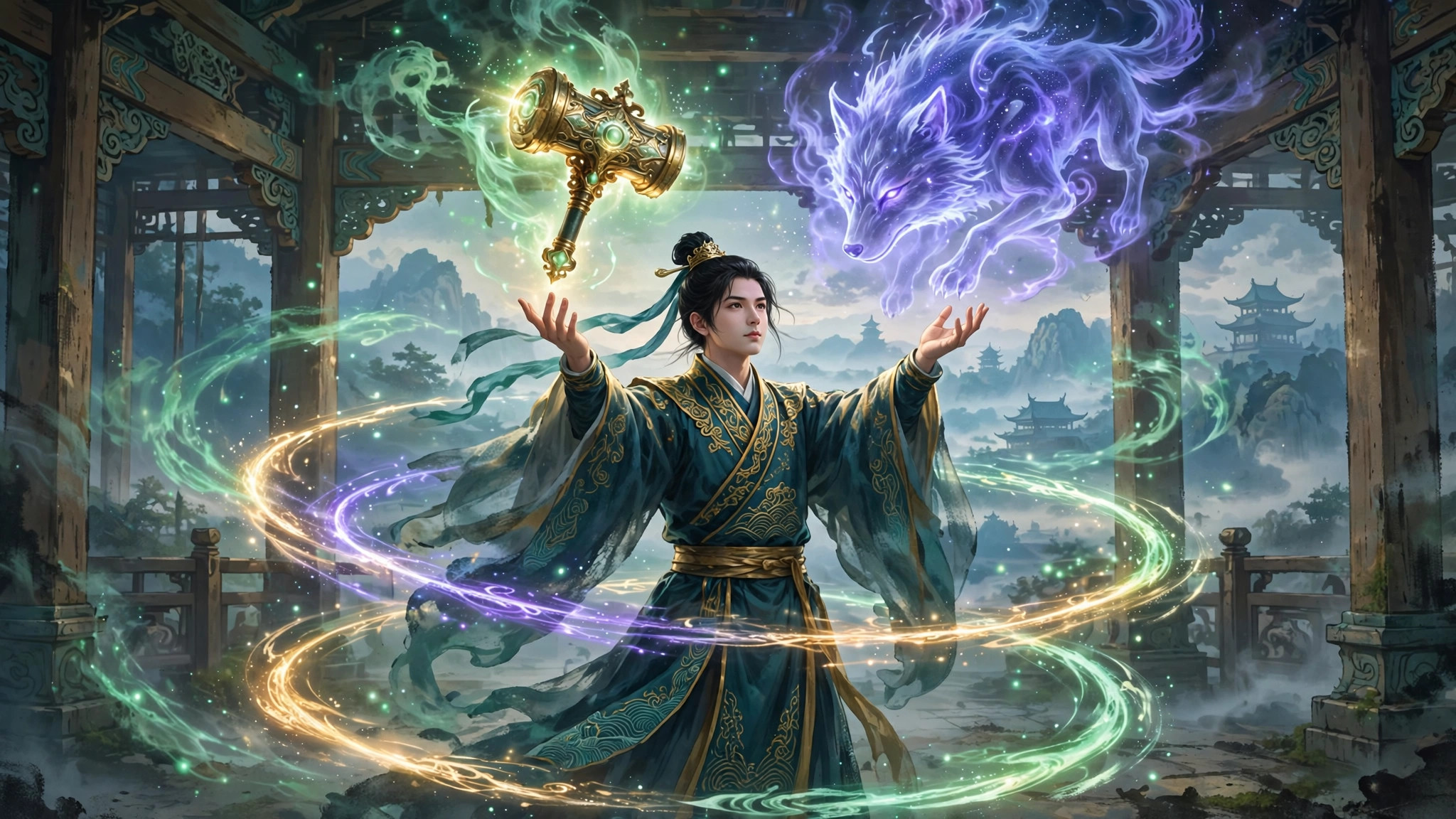
In the world of Soul Land, a child turns six, walks into a hall, and has their entire future decided in a single ceremony. A light appears — a wolf, a hammer, a blade of grass — and that shape is their martial soul, the power they will carry for the rest of their life. A martial soul (武魂, wǔhún) is an innate supernatural power that awakens inside a person, usually at around six years old, and takes the form of an animal, a plant, or a tool. It is the foundation of the power system in Douluo Dalu (Soul Land), the xuanhuan novel by Tang Jia San Shao serialized on Qidian from December 2008 to December 2009. A martial soul decides what kind of fighter its owner can become, and those who awaken with soul power can train as Spirit Masters, the most respected profession on the Douluo Continent.
The Chinese is literal. 武 (wǔ) means "martial" or "military," and 魂 (hún) means "soul" or "spirit." Put together, 武魂 is a soul that fights — a person's fighting spirit made visible and real.
The idea did not exist in classical Chinese literature the way qi or the dantian did. It is a modern webnovel invention, built for a story that wanted a power system as clean and legible as a character sheet in a game. That is part of why it caught on so fast: any reader can understand it in one sentence.
On the Douluo Continent, every child goes through a martial soul awakening ceremony at roughly six years of age. The ceremony does two things at once: it reveals the child's martial soul, and it measures their innate soul power — the raw talent they were born with.
The results fall into three broad outcomes:
The ceremony is also where the story's central drama begins. The hero, Tang San, awakens the Blue Silver Grass — a common weed — and everyone present writes him off. What they do not know is that he also carries a second, hidden martial soul, and that his "useless" grass is far stronger than it looks.
Every martial soul falls into one of three families, and the family shapes the owner's entire fighting style.
Beast souls (兽武魂, shòu wǔhún) take the form of animals: wolves, tigers, dragons, phoenixes, rabbits. The owner can merge with the soul, borrowing the animal's strength, speed, and senses. Beast souls are the most straightforward combat souls, and the strongest ones — dragons, phoenixes, divine beasts — mark their owners as natural-born elites.
Plant souls (植物武魂, zhíwù wǔhún) take the form of plants: vines, flowers, trees, grasses. They tend to be underestimated, which is exactly the point the novels keep making. A vine soul can bind enemies, drain their strength, or control a whole battlefield from a distance. Blue Silver Grass, the most famous plant soul in the genre, looks like a weed and turns out to be one of the most versatile souls in the series.
Tool souls (器武魂, qì wǔhún) take the form of objects: hammers, swords, pagodas, sickles, harps. The soul becomes a weapon the owner wields directly. Tang San's second soul, the Clear Sky Hammer, is a tool soul — and one of the most feared weapons on the continent.
Martial souls are normally inherited, generally from the stronger parent's soul, and can occasionally mutate into something neither parent had. In extremely rare cases a person is born with twin martial souls — two souls at once — a mutation so rare it drives the entire plot of Soul Land.
A martial soul on its own is mostly raw potential. The abilities — the actual techniques a Spirit Master uses in a fight — come from soul rings (魂环, húnhuán).
To gain a soul ring, a Spirit Master must hunt and kill a soul beast: an animal that has cultivated spiritual energy, much like the spirit beasts of xianxia novels. The beast's age determines the ring's color and power:
An older beast gives a stronger ability, but the body has to be able to withstand absorbing it. Reaching for a ring beyond your limits can kill you — a risk the novels return to whenever a hero gambles on a stronger ring than anyone thinks they can handle.
Soul power is measured in levels from 1 to 100, and every ten levels the Spirit Master must absorb a new soul ring to break through to the next rank. The ranks are:
Level 100 is the rank of God, reachable only by inheriting a divine position through trials — the final goal of the series.
The ladder is deliberately game-like: ten levels per title, one ring per title, and a visible color code for power. That readability is a big reason the system spread beyond its own novel. Readers who have never read Soul Land can still follow a fight scene, because the rings on the screen tell them who is winning.
The martial soul system is built around a single dramatic trick: the soul you are born with looks like your destiny, and the story proves it is not.
Blue Silver Grass is the perfect example. It is a weed. Every character who sees it — including, at first, the hero's own teachers — assumes Tang San's ceiling is a farmer's life. But the soul's apparent weakness hides real strengths: it is everywhere, it grows anywhere, it can bind, sense, and drain. The series turns the weakest-looking soul into one of the strongest by exploring what a plant soul can actually do when its owner refuses to accept the label.
This is why the "useless martial soul" has become a trope of its own across xuanhuan fiction. Authors reuse the setup constantly: a hero awakens something laughable — a chicken, a trash tool, a sickly flower — and spends the novel revealing the hidden potential everyone else missed. Fans commonly describe the best versions of this trope as the genre's answer to the underdog story: the power system itself hands the hero a disadvantage, and the hero's job is to prove the system wrong.
The trope also explains why martial souls show up in novels that have nothing to do with Soul Land. Once the idea existed, other authors borrowed it freely, and "martial soul" is now a general xuanhuan term rather than a Soul Land exclusive — which brings us to an important warning for new readers.
Here is the catch. Because the term spread so widely, "martial soul" does not mean the same thing in every novel. In Soul Land and its sequels, it is the system described above: awakening at six, soul rings, ten ranks. In other xuanhuan novels, the same two characters can mean something looser — a cultivator's fighting will made manifest, a spirit that possesses a weapon, or a soul a martial artist forges through training. Some novels treat the martial soul as something you develop, not something you are born with.
Fans commonly describe this as a "same word, different setting" problem, and the fix is simple: check which novel you are reading. If it is Soul Land or one of its sequels, the awakening-and-rings system applies. If it is anything else, the author may be using the term as a flavor label for their own invention.
The obvious starting point is Douluo Dalu itself, in its English translation as Soul Land, which began serialization in December 2008 and ran through December 2009. The donghua adaptation, which began airing in 2018, is one of the most-watched Chinese animated series ever made, and it visualizes the ring system beautifully: you can literally see a character's strength by counting the colored rings circling them in a fight. The live-action drama adaptation, Douluo Continent, followed in 2021.
If you like the system but want a different flavor, the broader genre it belongs to is xuanhuan — Chinese fantasy that mixes cultivation with magic, imaginary continents, and rules its authors invent freely. Martial souls are one of xuanhuan's signature inventions: a power system that feels like a game, reads like a fairy tale, and starts with a six-year-old standing in a hall, waiting to find out what they are.