Article
What Are Spirit Beasts in Xianxia Novels? Contract Beasts, Demon Beasts and Beast Companions Explained
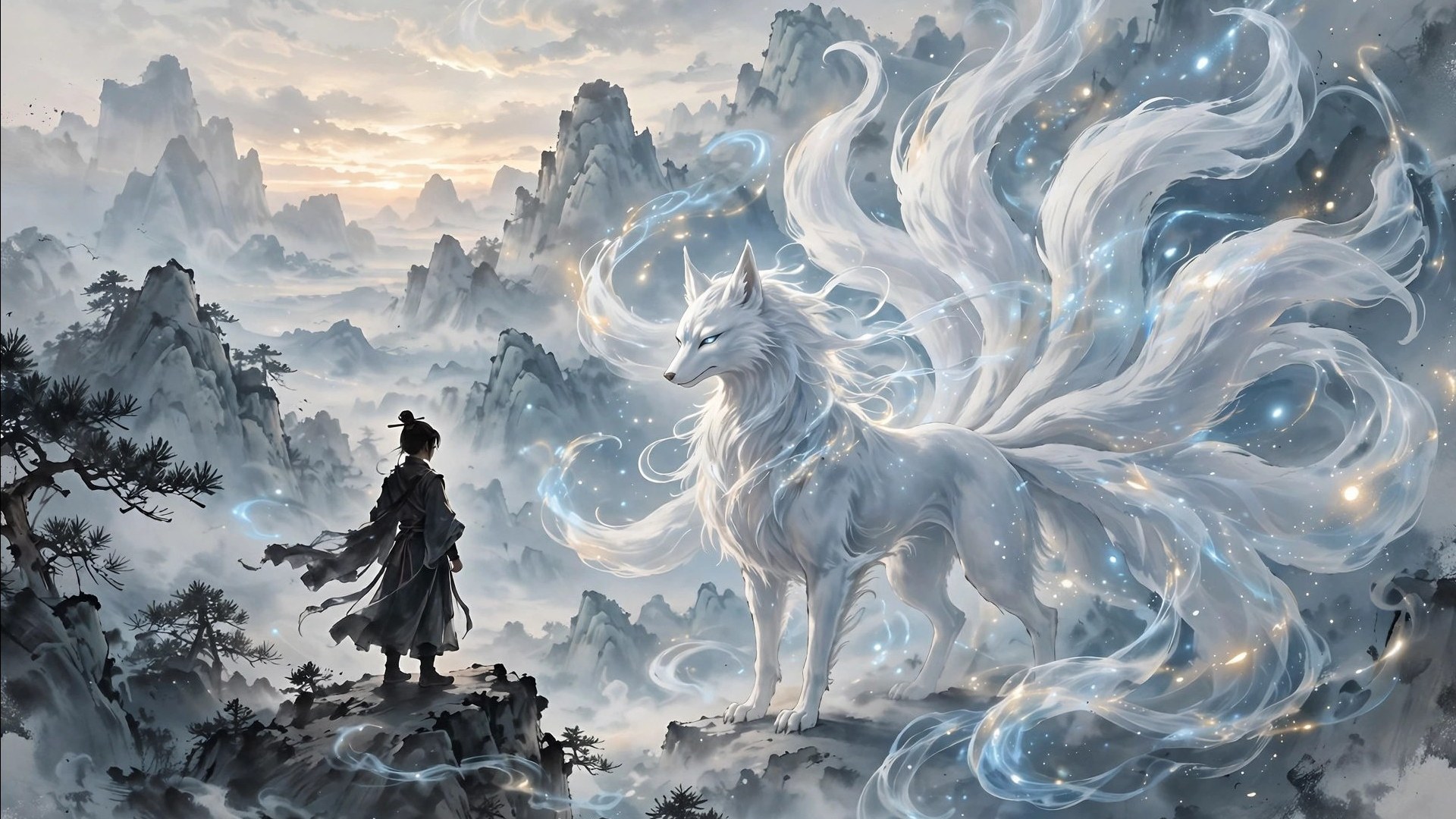
Every xianxia hero eventually gets a pet — and the pet is never just a pet. It starts as something small and scruffy: an injured fox cub, a cracked egg, a lazy-looking puppy dozing by a market stall. Then, a few hundred chapters later, that same animal is the size of a mountain, breathing lightning, and flattening enemy armies while the hero stands on its head. Readers love this arc more than almost anything else in the genre.
A spirit beast (灵兽, língshòu) is an animal in xianxia novels that has absorbed enough spiritual energy to awaken intelligence and begin cultivating, much like a human cultivator. Unlike ordinary animals, spirit beasts grow stronger over time, learn techniques, and can sometimes take human form. They serve as mounts, guards, and fighting partners — and bonding with one is considered one of the luckiest breaks a young cultivator can catch.
The Chinese term is built from two plain characters. 灵 (líng) means "spirit," "divine," or "clever" — the same character in 灵气 (língqì, "spiritual energy"). 兽 (shòu) simply means "beast" or "animal." So 灵兽 (língshòu) is a beast that has become spiritual: an animal whose nature has been transformed by spiritual energy.
English translations vary. Most translators use "spirit beast" or "spiritual beast." You will also run into related terms worth distinguishing:
Fans commonly describe the difference this way: a demon beast is what attacks you in the wild, and a spirit beast is what it becomes after you beat it, heal it, and sign a contract. The line between the two is less about biology than about who holds the leash.
The core idea is delightfully simple. In cultivation worlds, spiritual energy is not exclusive to humans. Any living thing that absorbs enough of it over enough time can begin cultivating: plants become spirit herbs, minerals become spirit stones, and animals become spirit beasts.
Spirit beasts therefore run on a parallel track to human cultivators. They have their own version of cultivation ranks, they can experience breakthroughs, and their bodies develop supernatural traits — tougher scales, sharper claws, elemental powers like fire, lightning, or venom. Powerful beasts also condense a beast core (兽核, shòuhé) or demon core (妖丹, yāodān) inside their bodies: a crystal of concentrated energy that works like a beast's dantian. Kill the beast and take the core, and you have premium alchemy material — which is why hunting beasts is one of the most common ways young cultivators earn money. (For the economy that makes this possible, see our guide to spirit stones.)
Intelligence is what separates spirit beasts from magical wildlife. A spirit beast understands speech, forms plans, remembers debts, and holds grudges. The strongest ones in a novel can speak, scheme, and sometimes transform into human shape — at which point the distinction between "beast companion" and "character" gets very thin indeed.
The spirit-beast companion is older than the webnovel era. One of its most famous prototypes appears in the 16th-century classic Journey to the West: the White Dragon Horse (白龍馬, Bái Lóngmǎ), originally Ao Lie, the third son of the Dragon King of the West Sea. After devouring Tang Sanzang's original horse, the dragon transforms himself into a white horse and carries the monk for the entire pilgrimage — a beast companion bound by duty rather than affection, but a beast companion all the same.
Modern xianxia took that template and made it the hero's signature perk. The white-horse mount became a wolf, a dragon, a phoenix, a nine-tailed fox — bigger, fiercer, and increasingly tied to the hero's own rise in power.
No hero just buys one off a shelf. Novels treat acquiring a spirit beast as an event, and fans have come to expect a few classic routes:
The rescue. The hero finds a wounded, starving, or trapped young beast and heals it — often spending precious medicine. The beast remembers. This is the genre's favorite origin story, because it lets the beast's loyalty feel earned rather than purchased.
The blood bond (滴血认主, dīxuè rènzhǔ). The hero drips a drop of blood onto the beast, forging a master-servant recognition. In most novels this is the standard, nearly unbreakable contract: the beast cannot betray the master, and the master can often sense the beast's location and condition. Some stricter contracts are drawn as soul contracts (契约, qìyuē), binding the two lives together — if the master dies, the beast dies too.
The taming. Beat the beast in a fair fight, then offer it a choice: serve or die. Proud beasts — dragons, phoenixes, ancient bloodlines — almost always demand this route. They will not follow anyone weaker than themselves, and fans treat a tamed beast as the ultimate proof of a hero's strength.
The inheritance. Some heroes are born into beast-taming clans or join sects that specialize in raising spirit beasts, and receive a beast egg or cub as part of their training. These beasts tend to start impressive and stay that way, which is precisely why this route is usually given to side characters rather than the protagonist.
A bonded spirit beast is a force multiplier, and authors use them to solve practical storytelling problems:
Transport. Flying swords are fast, but a flying beast is faster — and far more stylish. A dragon mount crossing the sky is the genre's shorthand for "this person has arrived." Beast mounts also bypass the usual travel-time excuses, letting plots move at the speed of the story.
Combat. In a fight, a spirit beast is a second cultivator who never argues about the plan. High-grade beasts fight at ranks far above their master's level, which is exactly why the hero keeps surviving encounters they should not. The classic scene: the hero is cornered, everyone counts him out, and then his "pet" reveals its true form.
Treasure hunting. Beasts have sharper senses than humans. Sniffing out spirit herbs, warning of ambushes, sensing danger in ruins — the beast companion doubles as a living radar. Entire dungeon arcs run on the beast pointing its nose at a wall and the hero realizing something valuable is behind it.
Status. This one is pure genre logic. In a world where everyone sizes everyone else up at a glance, riding a rare beast says what words cannot: this person has luck, backing, or both. Stealing, poisoning, or killing someone's spirit beast is therefore one of the fastest ways for a villain to make the conflict personal — readers understand the stakes instantly.
The spirit beast hits three reader fantasies at once. First, the loyalty fantasy: unlike the backstabbing sects and treacherous clans, a contracted beast cannot betray you. In a genre full of betrayal, the beast is the one relationship that is safe. Second, the power fantasy: every breakthrough of the beast is a free power-up for the hero, and readers get to enjoy two growth arcs for the price of one. Third, the pet fantasy: at its core, this is the same pleasure as any beloved animal companion — the beast is loyal, brave, and occasionally funny, and watching it grow from a scruffy cub into a world-shaking divine beast never gets old.
Villains, meanwhile, tend to own beasts the wrong way. Their beasts are enslaved through cruelty rather than bonded through contract or kindness, so they defect, rebel, or abandon their masters at the worst possible moment. The genre's moral is consistent: a beast won by force is a liability; a beast won by kindness is an army of one.
The spirit beast is one of xianxia's most reliable pleasures precisely because it is so old and so flexible. It descends from classical tales of dragon steeds and fox spirits, passes through the modern webnovel's power-level machinery, and lands in the reader's lap as something warm: a companion that grows alongside the hero and never leaves. The next time a protagonist kneels beside a wounded cub and shares their last healing pill, you will know exactly how that story ends — and you will read it anyway.