Article
What Is Reincarnation in Xianxia? The Wheel of Rebirth Explained
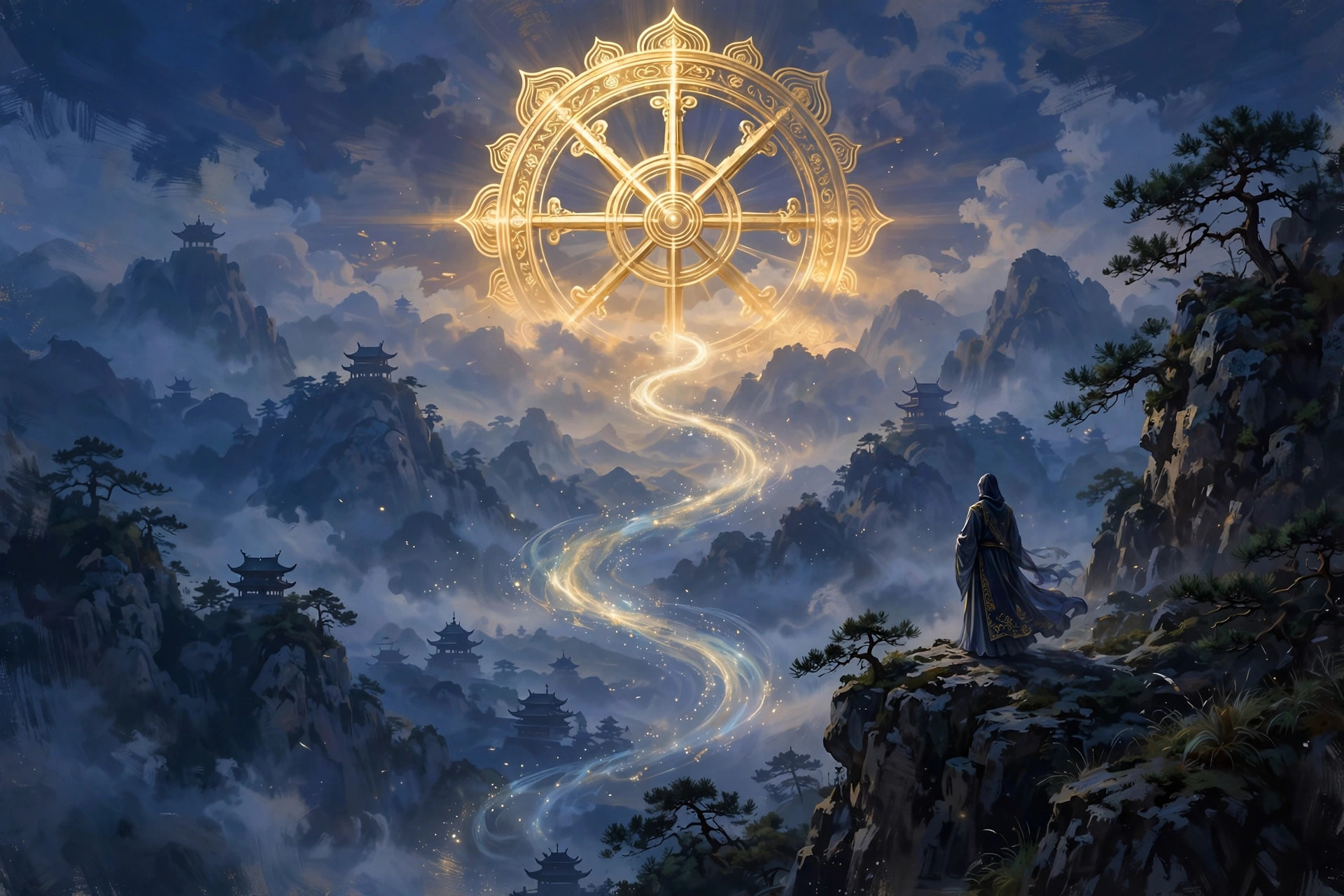
In most stories, dying is the worst thing that can happen to a character. In xianxia, it is often just paperwork. *Reincarnation in xianxia — 轮回 (lúnhuí), the wheel of rebirth — is the belief that when a person dies, their soul is reborn into a new life, and that this cycle repeats endlessly until they find a way out.* It is why a novel can kill its hero in chapter one and still have a thousand chapters left. Cultivation itself is, in many novels, a long attempt to step off the wheel for good.
It comes from the Buddhist doctrine of saṃsāra, the beginningless cycle of repeated birth and dying. Xianxia takes that doctrine and rebuilds it as a story engine: a system with rules, loopholes, and — for the strong — an escape hatch.
The two characters spell it out: 轮 (lún) means "wheel," and 回 (huí) means "to return." Together, 轮回 is "the turning wheel" — a cycle that comes back around to where it started. The word is the Chinese translation of the Sanskrit saṃsāra, which Wikipedia's article on the subject defines as "the beginningless cycle of repeated birth, mundane existence and dying again."
That framing tells you how the genre thinks about rebirth: in xianxia, reincarnation is not a gift, it is a trap. Every life ends in death, every death leads to another birth, and every birth leads back to suffering — unless you are strong enough to break the pattern. The wheel is the problem, and cultivation is the proposed solution.
Not every rebirth is equal. Buddhist cosmology, which the novels borrow wholesale, describes six realms of rebirth — three higher, three lower. Wikipedia's article on the six paths lists them as the worlds of gods (deva), human beings, warlike demigods (asura), animals, hungry ghosts (preta), and hell (naraka). A soul's destination depends on the karma it accumulated in life.
The human realm. The default destination, and the one the stories care about most. Novels treat a human rebirth as precious because humans can cultivate — animals and ghosts mostly cannot. A character reborn as a human has won a kind of lottery: another chance to practice, another chance to climb.
The god and demigod realms. A good rebirth for a soul with strong merit, but a dead end for a cultivator. Gods live long, pleasant lives — and then, when their accumulated good karma runs out, they fall back down the wheel. Even the best rebirth is still a rebirth.
The animal realm. Rebirth as a beast, usually reserved for souls weighed down by ignorance. Xianxia softens this one: spirit beasts in these novels can cultivate too, so a reborn-as-animal character is not necessarily doomed. Some stories make it a feature — a hero reborn as a demonic beast, clawing back to human form one breakthrough at a time.
The hungry ghost realm. The fate of souls ruled by greed and craving. Hungry ghosts are traditionally depicted with huge bellies and needle-thin throats, forever starving no matter how much they consume. In novels they mostly appear as background horrors — restless spirits haunting old battlefields — rather than as destinations for main characters.
The hell realm. The lowest rung, for souls heavy with hatred and evil. Xianxia rarely sends a protagonist here, but it loves threatening villains with it, and a stint in hell is the ultimate punishment for an enemy the hero cannot simply kill — killing them would only send them around the wheel again.
One rule new readers should know: ordinary rebirth wipes the memory. The soul is reborn, but the person — memories, skills, grudges — is gone. That is exactly why the genre's reborn protagonists are so special: they are the exception.
If the body dies, what is left to be reborn? The novels answer with an old Chinese model of the soul. According to the traditional view recorded on Wikipedia, every person has two kinds of soul: the hun (魂), a spiritual, ethereal, yang soul that leaves the body after death, and the po (魄), a corporeal, substantive, yin soul that remains with the corpse. One Daoist tradition counts them precisely: three hun and seven po (三魂七魄), a number fixed during the Later Han period.
This is the machinery that makes reincarnation possible. The hun is what travels — it leaves the dead body, passes through the underworld's judgment, and is reborn. The po stays behind, which is why novels treat corpses, graves, and ancestral spirits with such care: the part of a person left with the body can still be disturbed, honored, or weaponized.
Powerful cultivators change the equation. A cultivator who has formed a nascent soul has a soul strong enough to resist the wheel's usual rules. Their nascent soul can escape a dying body, survive on its own, and choose its next vessel instead of being assigned one. This is the bridge between reincarnation and the genre's most common plot device: the reborn protagonist.
Reincarnation is not just background philosophy in xianxia — it is one of the genre's most reliable plot engines, and it comes in a few shapes readers will meet again and again.
The reborn protagonist. The most famous shape. A powerful cultivator is betrayed or killed at the height of their power, and their soul is reborn — usually into the body of a young nobody, a discarded heir, or a dying teenager. Crucially, they remember everything: their techniques, their enemies, their regrets. The story's pleasure is watching a mind with centuries of experience operate inside a body with none of its advantages.
The reincarnated immortal. A subtler variation. An immortal deliberately enters the cycle — to escape a catastrophe, to heal a wounded soul, or to experience a life they missed — and is reborn as a mortal child with their memories sealed. The story becomes a slow rediscovery: impossible talent, ancient techniques surfacing in dreams, old enemies recognizing a face they thought was gone forever.
The enemy who comes back. Reincarnation also lets villains return. A defeated demon lord reborn as a sect disciple. A rival who died in the last arc turning up as the newborn child of a friendly clan. The wheel gives the author a way to keep a grudge alive across lifetimes.
New readers often confuse reincarnation with transmigration, and the novels themselves sometimes blur the line, but the two are different devices. Reincarnation is a soul reborn into a new life — same world, same cycle, a fresh start. Transmigration is a soul crossing from one world into another entirely, usually arriving in a body that already belonged to someone else. A reborn cultivator wakes up as a baby and grows up again; a transmigrator wakes up as an adult in a stranger's life and has to fake their way through it.
The distinction matters because it changes what the story can do: reincarnation lets an author write a long life from the beginning, with childhood and slow growth, while transmigration drops a modern person into a fantasy world to use their outside knowledge as the advantage. When a novel says a character "reincarnated," the past life was in the same world; when it says they "transmigrated," they came from somewhere else. For the full breakdown, see our guide to transmigration.
If reincarnation is the trap, cultivation is the escape plan, and that is the idea that ties the whole genre together. A mortal lives, dies, and is reborn according to their karma. A cultivator extends their life with each breakthrough, buying more time to grow stronger before the wheel claims them. And an immortal — someone who has ascended beyond the mortal world — has stepped off the wheel entirely.
This is also why karma and reincarnation are always discussed together in xianxia. Karma decides where the wheel sends you next, so a cultivator who wants a good rebirth — or no rebirth at all — has to manage their debts the way they manage their cultivation. For the full picture of that ledger, see our guide to karma.
There is a tension the best novels do not resolve. The wheel is presented as just, because karma decides the destination — and as cruel, because even a good person is trapped in it. The cultivator who ascends escapes but leaves everyone they loved still turning. Some stories treat that as triumph; others treat it as the genre's saddest bargain.
Reincarnation is the quiet assumption underneath almost everything in xianxia. It is why death is rarely final, why grudges outlive the people who made them, why a nobody can be a fallen emperor, and why the whole project of cultivation exists at all: to stop dying, to stop forgetting, to stop coming back. Once you can see the wheel, the genre's strangest choices stop looking strange — the beggar who might be a reborn immortal, the child who speaks like an old man, the villain who dies laughing because they know they will get another turn.
So the next time a character in your novel dies and the story keeps going, you will know why: the wheel turned, the soul came back, and the story was never about the life that ended. It was about the one that begins.