Article
What Is a Rogue Cultivator in Xianxia? The Free, Broke Life of the Sanxiu
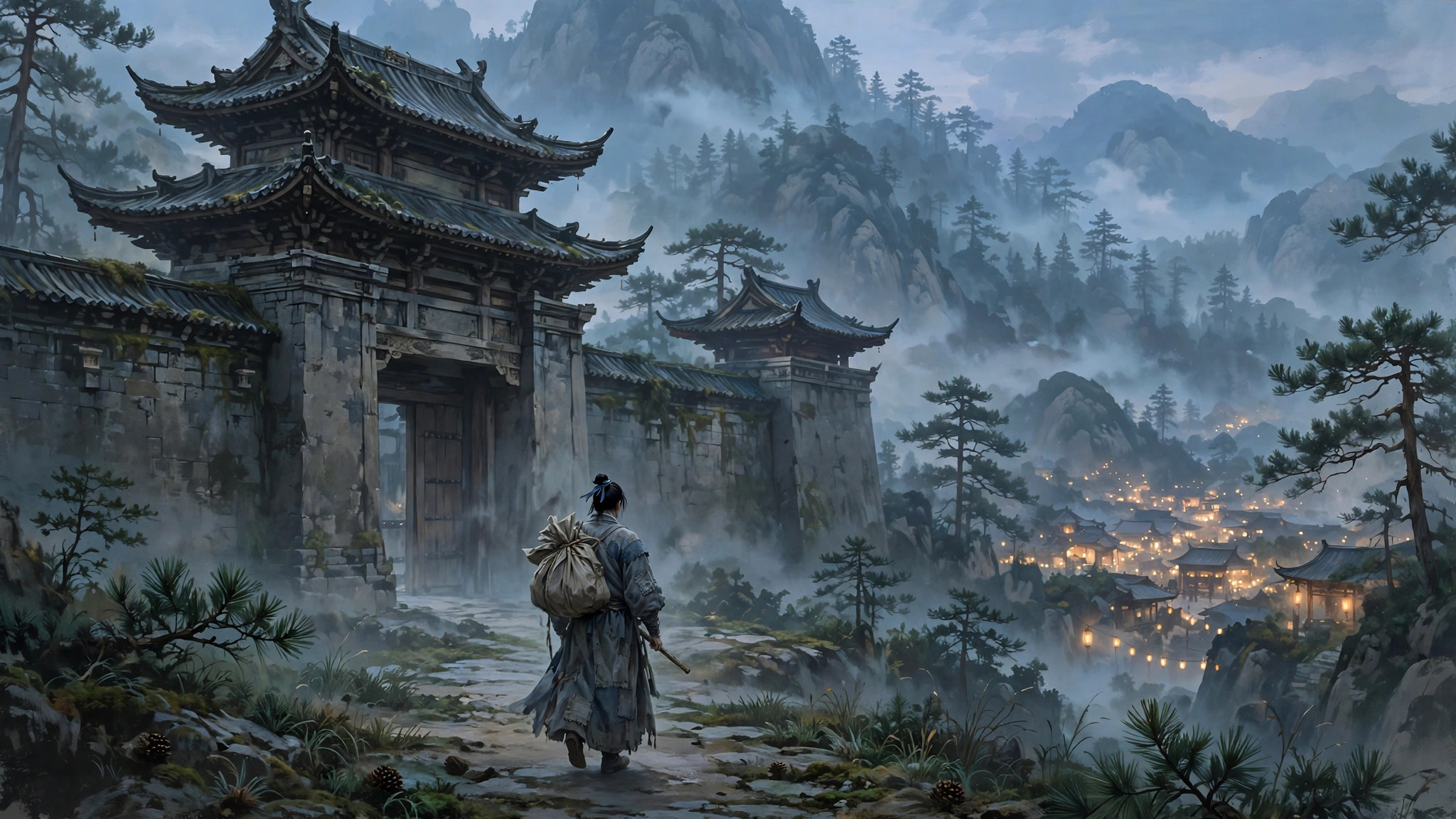
The sect gates close at dusk. Inside, disciples return to warm courtyards, stocked kitchens, and teachers who will correct their breathing before dawn. Outside, a lone figure in a patched robe walks the other way, toward a rented room above a market stall, carrying everything he owns in a cloth bundle. He has no sect, no master, and no one who would notice if he never came back. In the language of the genre, he is a rogue cultivator — and his life is the hardest, freest path in xianxia fiction.
A rogue cultivator (散修, sǎnxiū) is a cultivator who belongs to no sect, clan, or other cultivation organization. Fan glossaries of the genre translate the term literally as "loose cultivator," and the two English labels mean the same thing. The defining feature is not power level or personality. It is independence: a rogue cultivator answers to no sect leader, follows no sect rules, and receives no sect support. That single fact shapes nearly everything about how such characters live, fight, and survive in a story.
The Chinese term splits cleanly in two. The first character, 散 (sǎn), means scattered, loose, or dispersed — the opposite of gathered under one roof. The second, 修 (xiū), is the same character used in the word for cultivation itself: to cultivate, to refine oneself, to practice the path. Put together, 散修 describes someone cultivating on their own, scattered from any group.
English translators have rendered the term in several ways, which is why new readers sometimes meet the same character type under different names. "Rogue cultivator" is the most common in translated novels, "loose cultivator" is the literal rendering, and "loose practitioner" appears in some fan wikis.
Novels give rogue cultivators many different backstories, and the route matters because it tells the reader what kind of character to expect. The most common is simple rejection. Sects test hopefuls for talent, spiritual roots, age, and background, and they turn away far more applicants than they accept. A teenager who fails the entrance test does not stop wanting to cultivate; he simply has to find another way, and that way usually means becoming a rogue cultivator.
Others leave voluntarily. A disciple might flee a corrupt sect, refuse an arranged marriage inside a clan, or break with a master whose methods disgust him. Some are expelled for breaking rules or offending an elder. Still others never tried to join at all: they stumbled on a manual in a ruined cave, inherited a technique from a dying stranger, or were taught quietly by a hermit who belonged to no sect himself. A few powerful rogue cultivators are former sect elders who walked away at the height of their strength and now answer to no one.
The gap between a sect disciple and a rogue cultivator is not mainly about talent. It is about resources, and fans commonly describe this gap as the single biggest handicap in the genre. A sect disciple receives a steady supply of the things cultivation requires: a place to live where spiritual energy runs thick, a complete technique suited to their talent, teachers who catch mistakes early, pills for healing and breakthroughs, and fellow disciples to train and travel with. A rogue cultivator must find or buy every one of those things alone.
Spirit stones illustrate the problem best. They are the cultivation world's currency and fuel, and sects control mines, markets, and steady income. A rogue cultivator's purse is usually nearly empty, and every purchase — a manual, a pill, a night in a safe inn — forces a hard choice. Techniques are a second bottleneck. Sects guard their core manuals jealously, so a rogue cultivator often practices an incomplete, outdated, or mismatched technique, learning by trial and error where a disciple would be corrected in an afternoon.This is why readers are told, again and again, that rogue cultivators advance slowly. It is not that they lack determination. It is that every step costs more and teaches less than the same step inside a sect.
If the odds are that bad, the obvious question is how any rogue cultivator survives at all. Novels answer with a whole shadow economy built for people outside the sects. The center of it is the market town, often called a fangshi, where rogue cultivators gather to trade, take work, and swap news. A market's stalls sell manuals of uncertain quality, secondhand treasures, beast materials, and herbs gathered by people who could not afford to keep them.Prices are high and fakes are common.
Work comes in several familiar forms. Rogue cultivators escort merchant caravans, guard market towns, hunt spirit beasts for their cores, gather herbs in dangerous territory, and take posted missions that sect disciples consider beneath them. Some become formation repairers, pill peddlers, or guides for richer travelers. The luckiest find a patron: a merchant family, a small clan, or a powerful senior who passes on resources in exchange for loyalty or service.
Alliances matter as much as income. Rogue cultivators form loose bands, sworn siblinghoods, and temporary expedition parties to explore ruins or hunt beasts too strong for one person. These groups lack a sect's rules and backing, so they break apart often, but while they last they offer the one thing a lone cultivator cannot buy: someone watching their back.
Given all of this, why would any character choose the rogue path, or stay on it once a sect offers them a place? Because freedom, in these novels, is not a slogan. It is a practical advantage with real value.
A rogue cultivator takes no orders. They do not march to war for a sect leader's grudge, guard a mountain they do not care about, or hand over a treasure they found because sect rules say so. They choose their own techniques, even forbidden or unfashionable ones a sect would ban. They travel where the opportunities are instead of where they are assigned. They can walk away from a corrupt elder, a doomed expedition, or a losing war — options a sworn disciple often does not have.
That freedom also shapes the kind of hero readers remember. Sect disciples inherit their story: a mountain, a master, a destiny arranged by their elders. Rogue cultivators have to invent theirs, one risky job at a time. When such a character finally breaks through to a new realm, the achievement feels earned in a different way, because no institution carried them there. Novel blurbs lean into this appeal directly — recent serials even build whole premises around a market rogue cultivator who failed to enter a sect and must climb anyway, which tells you how recognizable the archetype has become.
Freedom has a bill, and novels are unsparing about it. A rogue cultivator who is robbed, framed, or attacked has no sect to avenge them. A sect disciple can call on elders, allies, and the sect's reputation for protection; a rogue cultivator who offends a young master from a great clan must face that clan alone, or run. Injuries are harder to survive without sect pills and healers, and a failed breakthrough with no teacher nearby can be fatal rather than merely embarrassing.
Reputation cuts both ways too. Sects look down on rogue cultivators as unrefined, unreliable, and poorly taught, and that contempt closes doors: auction houses charge them more, guards watch them closer, and sect disciples treat them as easy prey. Yet the same outsider status can be a disguise: a rogue attracts less attention than a sect disciple and hears gossip that never reaches the great sects' peaks.
A few signals will help you recognize a rogue cultivator quickly. First, check the character's introduction: if the narration stresses that he has "no sect," "no master," or "no backing," the author is flagging the archetype. Second, watch their money. Constant worry about spirit stones, haggling over pills, and delight at a small windfall are classic rogue traits. Third, notice their gear. Patched robes, a mixed bag of secondhand treasures, and a technique that is powerful but visibly incomplete all point the same way.
None of this means every rogue cultivator is weak. Some are hidden masters, retired elders, or geniuses who refused every sect that courted them. The label describes their position, not their power — and that gap between low status and high strength is exactly why the archetype produces so many satisfying reveals.
The rogue cultivator matters because he is the genre's reality check. Sects show the cultivation world at its most organized and generous; the rogue shows what it costs to live outside that generosity.
That is also why the archetype endures across thousands of novels. Readers may dream of joining a great sect, but they recognize something closer to home in the figure walking away from the gates at dusk: no backing, no safety net, a bundle of everything they own, and a path they have to build themselves. The sect disciple inherits a road. The rogue cultivator makes one. In a genre about defying fate, that is a hard story to beat.