Article
What Are Spirit Stones? The Currency of the Cultivation World Explained
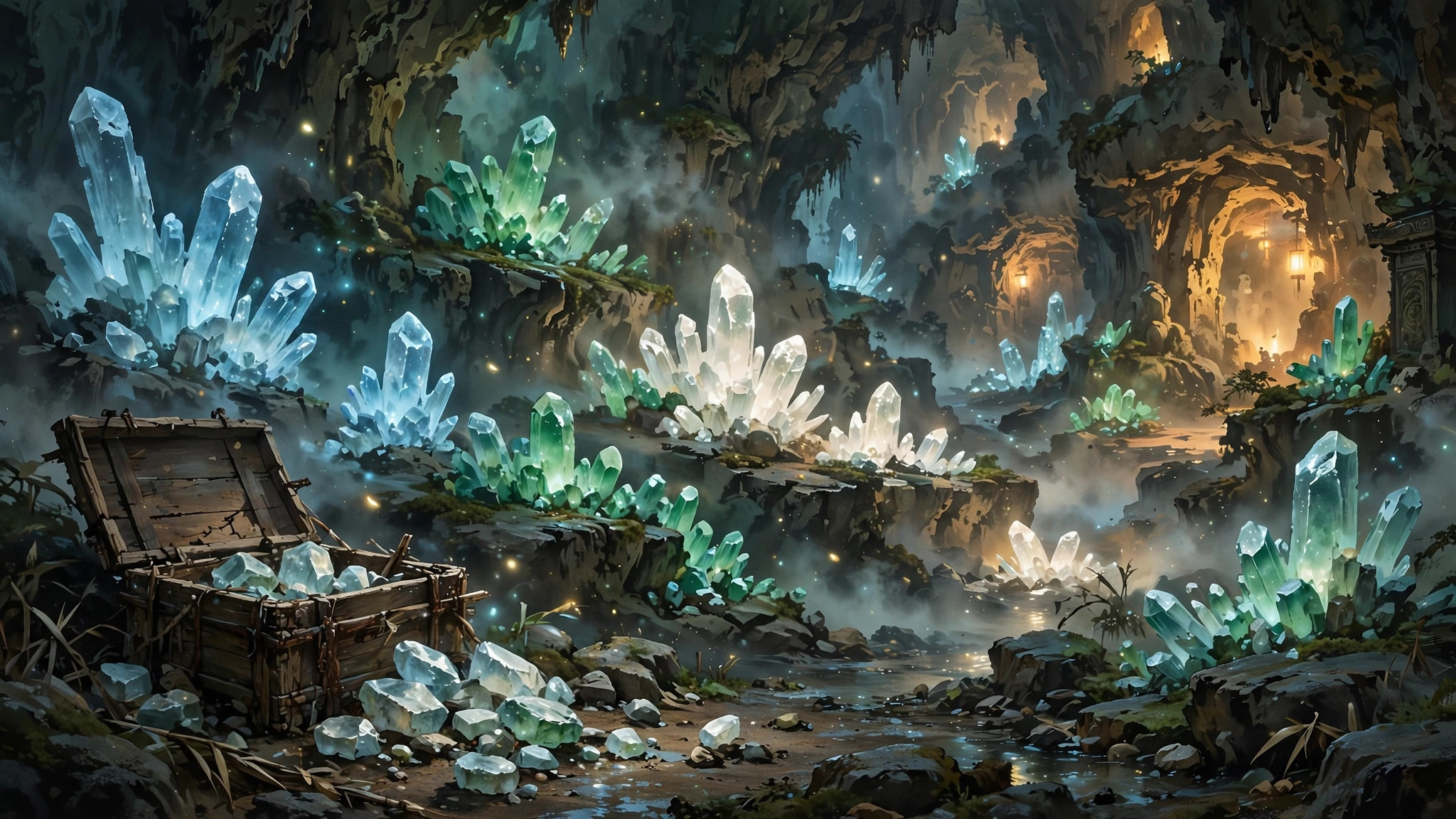
Every cultivation novel needs a money system, and the genre settled on glowing rocks. Spirit stones (灵石, língshí) are crystallized chunks of spiritual energy that work as both currency and fuel in xianxia and xuanhuan fiction — the coins, batteries, and plot devices of the cultivation world. When a character pays for an inn, buys a flying sword, or bribes a gate guard, they count out spirit stones. When they need to cultivate faster or power a formation, they burn them.
The Chinese term breaks down simply: 灵 (líng) means "spirit" or "spiritual," and 石 (shí) means "stone." A spirit stone is literally a spiritual stone. But in the novels, it's far more than a pretty rock — it's the thing every sect hoards, every rogue cultivator schemes for, and every young protagonist is embarrassingly short of.
In most novels, spirit stones are minerals that formed over millennia in places rich in spiritual energy — dragon veins, ancient battlefields, deep mines. Each stone holds a measurable amount of spiritual qi, which a cultivator can absorb directly to speed up their training. Think of them as physical savings accounts of energy: instead of breathing in qi from the air one strand at a time, you hold a stone and drink from a reservoir.
This dual nature is what makes them money. Gold would work as currency too, but only spirit stones let a cultivator convert wealth directly into power. That single property drives entire plots: a rich young master buys a breakthrough his talent doesn't deserve, while a broke protagonist risks a spirit stone mine for the same chance. Wealth and strength aren't separate systems in these worlds — spirit stones are the bridge between them.
Fans commonly describe their appearance as translucent crystals, faintly glowing blue, green, or white depending on the novel, and warm or cool to the touch. The details vary by author, but the core idea never changes: condensed, portable, spendable spiritual energy.
Almost every novel with spirit stones sorts them into grades, because a money system needs denominations. The most common setup fans will recognize is a three-tier ladder:
Exact exchange rates vary wildly between novels — authors invent whatever numbers their plot needs — so treat "one mid-grade equals a hundred low-grade" as a common convention, not a rule. Some stories add even higher tiers like supreme-grade or spirit stone essence, usually reserved for ancient treasures or climactic auctions.
The grades also matter for cultivation itself. A higher-grade stone holds denser, purer energy, so cultivators preparing for a risky breakthrough want the best stones they can afford — impurities in cheap stones are a classic setup for a nasty surprise mid-cultivation.
Spirit stones show up in novels in four recurring roles, and recognizing them will make a lot of scenes click:
1. Currency. The most obvious use. Markets, auction houses, sect contributions, bribes, rewards for posted missions — almost every transaction in the cultivation world is priced in spirit stones. When a novel mentions that a poor rogue cultivator's entire fortune is three low-grade stones, it instantly tells you where they stand in the pecking order.
2. Cultivation fuel. Holding a stone during meditation lets a cultivator absorb energy far faster than pulling it from thin air. This is also why sects can raise disciples quickly: they don't just teach, they fund cultivation. The dantian fills the same way whether the qi came from a stone or the morning mist — the stone just delivers it in bulk.
3. Powering formations. Defensive arrays, teleportation platforms, spirit-gathering formations — they all run on spirit stones slotted into formation cores. Many a siege scene turns on whether the defenders' stone reserves outlast the attackers' patience.
4. Refining and alchemy. Pill recipes, weapon forging, and feeding spirit beasts all consume stones as ingredients or catalysts. Alchemists in particular burn through them like a furnace, which is why pill masters are both the richest and the poorest people in these worlds.
No novel economy works without a supply, and spirit stones give authors a reliable plot generator: the spirit stone mine. Nearly every cultivation world has mines — depleted ones fought over by minor sects, legendary ones guarded by ancient beasts, newly discovered veins that spark sect wars.
Mines do triple duty in storytelling. They're settings (dangerous, trap-filled, monster-infested), prizes (whoever controls the mine controls the region's economy), and power-ups (the protagonist always finds the mine's hidden core or the vein everyone else missed). Some novels add spirit stone veins that produce stones continuously, making them the most valuable long-term assets a sect can own — the cultivation equivalent of oil fields.
Rogue cultivators who can't access sect mines get stones the hard way: hunting spirit beasts for their cores, selling loot, taking dangerous missions, or raiding tombs. Poverty is a personality trait in this genre, and the mine is where it gets fixed.
Spirit stones are such a convenient tool that they've become almost invisible genre infrastructure. A few reasons they never go away:
If you've noticed characters obsessively counting stones, flaunting storage rings full of them, or going pale when a formation "eats" a thousand mid-grade stones in one night, you're watching the genre's economic engine run exactly as designed.
Next time you pick up a cultivation novel, watch for three moments that tell you how the author handles money. First, the starting fortune — how many stones the protagonist begins with sets the story's scale (three stones means a rags-to-riches tale; a sect inheritance means a different one). Second, the first windfall — the mine, the auction win, or the tomb loot that changes their trajectory. Third, the burn rate — what the protagonist sacrifices stones for reveals what they value: breakthroughs, weapons, friends, or revenge.
Once you see the pattern, whole chapters decode themselves. That tense auction scene isn't really about a pill — it's about whether the protagonist can afford to become who they need to be.
Want the rest of the toolkit? Start with what xianxia actually is, then learn how cultivation realms turn those stones into power.