Article
What Is Wuxia? China's Martial-Hero Stories, Explained
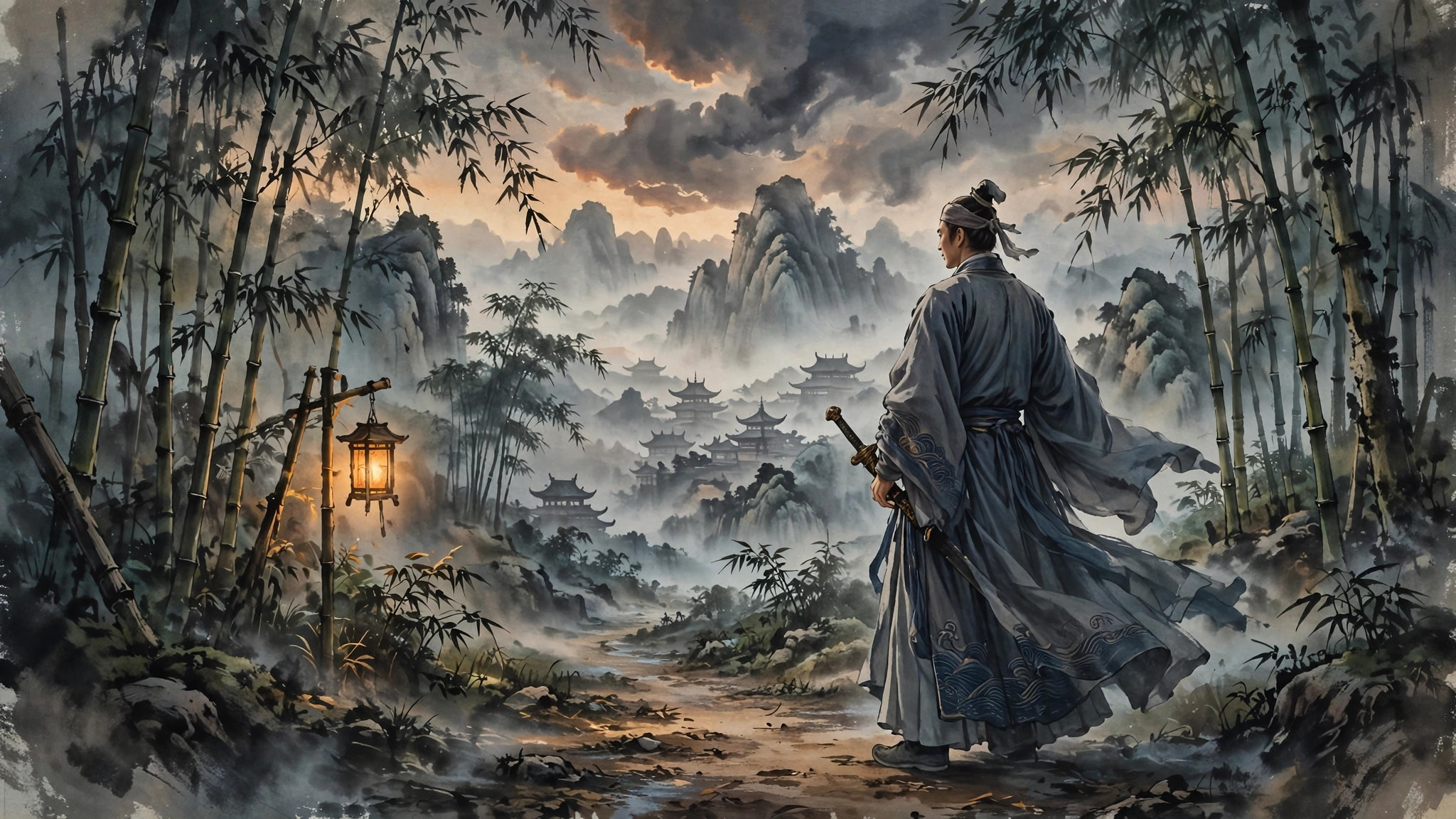
Take everything magical out of a Chinese fantasy novel — no flying swords, no thousand-year-old monsters, no lightning strikes from the sky — and the story that remains is wuxia. It is the older, grounded genre beneath all of Chinese web fiction: stories of skilled fighters, wandering heroes, and a hidden underworld of martial sects, set in a recognizable historical China. If xianxia is about becoming a god, wuxia is about becoming a hero.
The word breaks into two parts: 武 (wǔ), "martial" or "military," and 侠 (xiá), "hero" or "chivalrous person." A xiá is someone who uses skill and strength to uphold justice, help the weak, and keep their word — the closest English equivalent is probably "knight-errant," though a xiá answers to no lord, only to a personal code of honor. Wuxia stories are adventures built around such figures.
Because the "hero" part matters as much as the "martial" part, wuxia is ultimately a moral genre. The fights are the draw, but the stories are really about loyalty, revenge, honor, and the cost of keeping one's word in a corrupt world. Fans often say the martial arts are the packaging and the chivalry is the product.
This is the question that confuses most newcomers, and it has a simple answer: wuxia heroes are human; xianxia heroes try to stop being human.
A wuxia protagonist might be the greatest swordsman alive, but they still age, bleed, and die. They train in martial arts that are exaggerated but framed as human skill — leaping across rooftops (轻功, qīnggōng, "lightness skill"), striking acupuncture points, channeling inner strength (内功, nèigōng). Nobody becomes immortal. There are no gods, no demons, and no heavens to ascend to.
A xianxia protagonist starts where a wuxia hero ends and keeps going: absorbing spiritual energy, forming a golden core, surviving heavenly tribulations, and eventually ascending to immortality. If a character can shatter a mountain with a punch or live for ten thousand years, you have left wuxia behind. For a fuller side-by-side breakdown, see our guide to xianxia vs wuxia vs xuanhuan.
Tales of wandering swordsmen are ancient in China — stories of youxia (游侠, roaming heroes) appear in records from the Han dynasty, more than two thousand years ago. But the wuxia novel as readers know it today was born in the 20th century, in the newspapers of Hong Kong and Taiwan.
The modern genre's founding figure is Jin Yong (1924–2018), born Louis Cha Leung-yung, a Hong Kong newspaper editor who began serializing martial-arts novels to fill column inches. His debut, The Book and the Sword, appeared in 1955 in the New Evening Post, and he went on to write fourteen novels and one novella. His The Legend of the Condor Heroes was serialized in the Hong Kong Commercial Daily from January 1957 to May 1959, and is often treated as the genre's defining work. His books have sold in the hundreds of millions of copies and have been adapted into dozens of TV series and films.
The other giant of the genre is Gu Long, a Taiwanese writer whose lean, cinematic style contrasted with Jin Yong's sweeping historical epics. Gu Long's heroes — the thief Chu Liuxiang, the detective-like Lu Xiaofeng, the tragic Li Xunhuan of the Xiaoli Feidao series — are cooler, more modern figures, and his short, punchy chapters read almost like film scripts. He died in 1985, leaving behind a body of work that reshaped what wuxia prose could sound like.
Together, Jin Yong and Gu Long created the template that every later martial-arts story, from 1970s kung fu cinema to modern web novels, draws on.
Every wuxia story remixes a familiar set of ingredients. Learn these and you can follow any of them.
Jianghu (江湖), the martial world. Literally "rivers and lakes," jianghu is the hidden society of martial artists existing alongside ordinary life — sects, clans, inns, and outlaws with their own rules, grudges, and hierarchies. We have a full guide to what jianghu means if you want the deep version.
The xia's code. Heroes live by promises: repay kindness, avenge wrongs, protect the weak, never betray a friend. Breaking the code costs a hero their standing — sometimes their life. Much of wuxia drama comes from heroes trapped between two conflicting obligations.
Sects and schools. Shaolin monks, Wudang Taoists, the Beggars' Sect, the demonic cult — martial arts are taught by organizations with distinct styles, rivalries, and politics. Joining a sect means gaining protection and inheriting its enemies.
Neigong and qinggong. Inner strength (内功) is cultivated through breathing and meditation, and it powers everything else; lightness skill (轻功) lets masters run across water or scale walls. These are presented as extreme human discipline, not magic — that framing is exactly what separates wuxia from xianxia.
Revenge and the tournament. Classic plots include the hero avenging a murdered master or family, the martial-arts tournament where hidden masters reveal themselves, and the quest for a lost manual containing an unbeatable technique.
Wuxia is the reason the other genres exist. Xianxia took wuxia's jianghu, its sects, and its lone heroes, and added immortality on top. The kung fu films of the 1970s — and through them, Hollywood action cinema — carried wuxia's choreography and honor codes worldwide. Even the modern cultivation web novel, for all its gods and realms, still structures its story around wuxia bones: the weak disciple, the sect tournament, the vow of revenge.
It also remains the most accessible entry point. Xianxia asks you to learn an entire cosmology of realms and tribulations; wuxia asks only that you understand honor, loyalty, and a good sword fight.
For English readers, the best starting point is Jin Yong in translation. MacLehose Press has published Anna Holmwood's translation of The Legend of the Condor Heroes as A Hero Born (the first of four volumes covering the novel), and it is the rare classic that genuinely earns its reputation — part historical epic, part love story, part martial-arts adventure. Gu Long's The Eleventh Son and the Chu Liuxiang stories also exist in English, though translations are patchier.
On screen, the 1980s–90s Hong Kong adaptations — the TVB Legend of the Condor Heroes serials, Tsui Hark's Swordsman films — are the fastest way to absorb the genre's flavor. Whatever door you enter through, you will find the same thing: ordinary people, extraordinary skill, and a code of honor worth dying for. That is wuxia.