Article
Young Master Trope Explained: The Arrogant Heir Every Xianxia Hero Meets
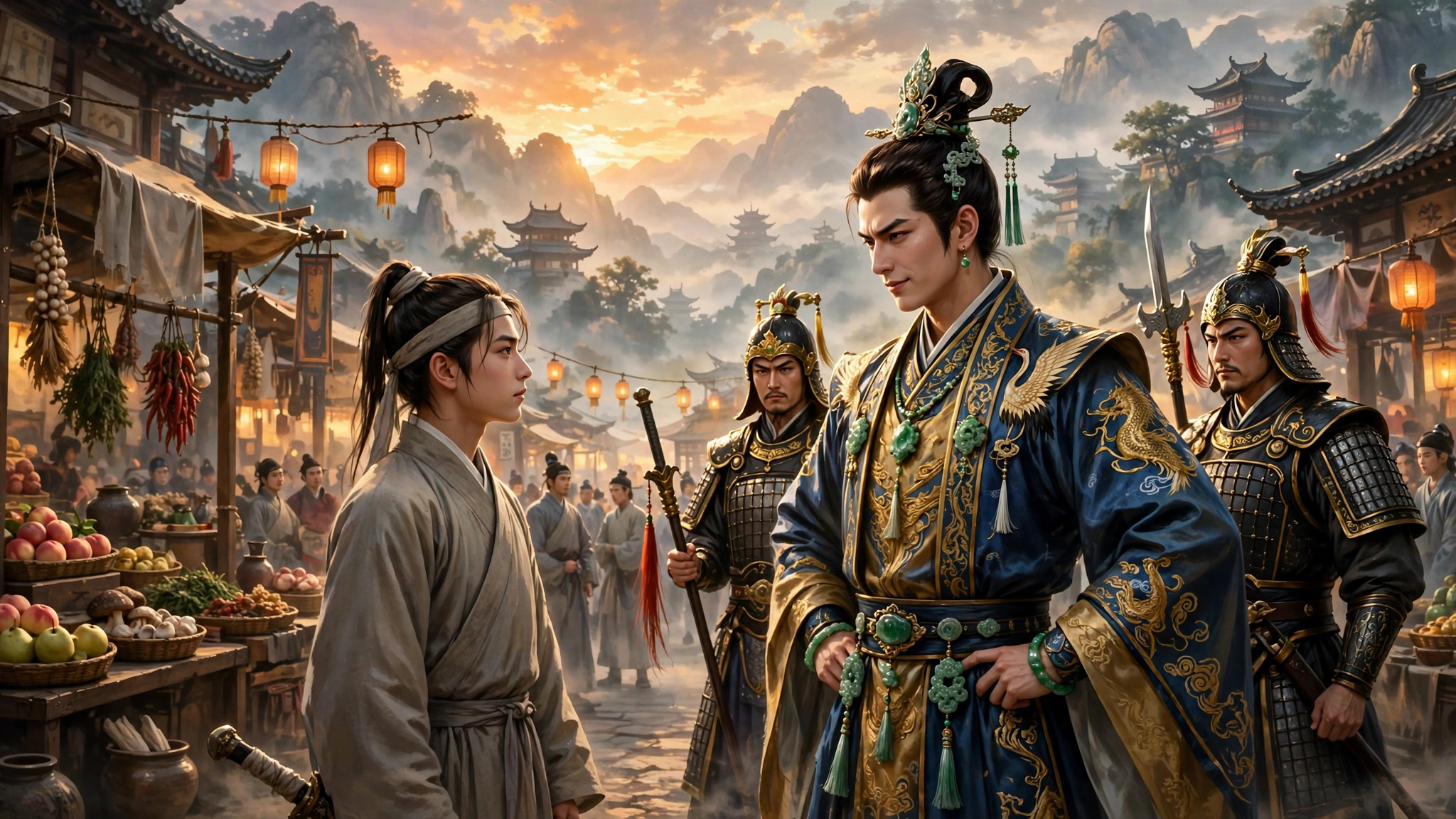
Three chapters into a cultivation novel, the hero walks into a market, a restaurant, or an auction hall — and trouble walks straight up to him. It wears silk robes, expensive jade, and an expression of total confidence. It is flanked by guards, trailed by admirers, and absolutely certain that the nobody in front of it should step aside. This is the young master: the arrogant heir of a powerful clan or sect, and one of the most reliable characters in all of xianxia.
The young master is not the story's great villain. He is something more useful — a small, loud obstacle who exists to be knocked down. Understanding him explains a surprising amount about how cultivation novels work, because almost every early conflict in the genre runs through him.
The term comes from shàoye (少爷), literally "young master" — the respectful form of address for the son of a wealthy or powerful household. In cultivation novels, fans commonly use it for a specific character type rather than just any rich son: a junior member of an influential clan, sect, or family who has status, resources, and bodyguards, but little of the talent or discipline that supposedly justifies them.
He is usually introduced with a small entourage. There will be a fawning attendant who announces his name and rank as if it were a threat. There will be guards who are stronger than he is. And there will be a public setting — a street, a shop, a banquet — because the young master needs an audience. His power is social as much as martial: he expects deference, and he treats its absence as an insult.
Crucially, the young master is almost never the strongest person in the room. That is the point. He is a mid-level nuisance backed by a much bigger name. The hero can beat him, but beating him means offending the clan or sect behind him, which is how a small street scuffle turns into a multi-chapter feud. The young master is the fuse, not the explosion.
Fans commonly describe the classic young-master scene in almost identical beats, and once you notice the pattern, you will see it everywhere:
First, the encounter. The hero, usually poor, unknown, or newly arrived in town, crosses paths with the young master over something trivial — a seat, a medicinal herb, a pretty companion, a misunderstood glance. The stakes are deliberately petty, because the young master treats petty things as matters of honor.
Second, the escalation. The young master demands an apology, a surrender, or a humiliation. He invokes his family name. His guards step forward. The crowd gathers, and someone in it whispers who he is, which tells the reader exactly how dangerous his backers are. This is also where face enters the picture: the young master cannot back down without losing it, so he doubles down instead.
Third, the reversal. The hero — who has been underestimated, dismissed as trash, or mistaken for a servant — reveals enough strength to win. The guards fall. The young master flees, or begs, or swears revenge through gritted teeth. The crowd reacts with shock, and that shock is doing narrative work: it tells the reader that something unusual has just happened.
Fourth, the consequence. The young master reports back to his elders. A stronger relative, an elder, or a hired expert is dispatched. The hero has now made an enemy with resources, and the story has its next arc. The young master himself may never return, or he may return repeatedly, each time with bigger backing and the same lack of self-awareness.
This loop is so common that readers treat it as a unit of plot, almost like a chapter template. It is not subtle. It is not meant to be. Its pleasure is rhythmic: provocation, escalation, reversal, consequence, repeat at a higher level.
The young master solves several problems for a cultivation author at once. First, he delivers conflict on demand. A hero who is quietly training in a cave generates no plot; a hero who has just humiliated a clan heir generates several chapters of it. The young master is a portable inciting incident.
Second, he makes the hero's strength legible. Cultivation power is abstract — realms, qi, techniques — and a new reader cannot easily tell how strong a character is supposed to be. But everyone understands humiliating a bully in public. When the hero defeats someone the whole town fears, the reader gets a concrete measurement of progress without a lecture on power levels. For the underlying system, see our guide to cultivation realms.
Third, he embodies the world the hero is fighting. Cultivation societies in these novels are rigid hierarchies: great clans, powerful sects, and elder councils that reward birth over merit. The young master is that hierarchy in miniature — unearned privilege with a loud voice. Every time the hero defeats one, the story stages the same argument: talent and effort should matter more than bloodline. Readers who feel stuck under real-world hierarchies tend to enjoy that argument a great deal.
Fourth, he is cheap to write and easy to replace. A young master needs no backstory, no tragic past, and no complex motivation. He wants respect, he expects obedience, and he cannot accept being refused. When one is defeated, another can be introduced in the next town with a different surname and the same function. For a serial novel running to hundreds of chapters, that reusability is a feature, not a flaw.
Not every young master is identical, and part of the fun is spotting which version has walked on stage.
The pure bully. The default model: arrogant, cruel, and dim. He exists to be humiliated, and readers cheer when he is. He rarely learns anything, which is why he can be reused so often.
The talented heir. A more dangerous variant: genuinely skilled, well trained, and still arrogant. Beating him actually means something, because his strength is real even if his character is not. These versions often become recurring rivals rather than one-scene jokes.
The schemer. Less common, and usually a sign the novel is raising its ambitions. This young master uses wealth and connections cleverly — framing the hero, buying off witnesses, hiring assassins — instead of just shouting in the street. He is harder to enjoy hating, because he is harder to beat cleanly.
The reformed heir. Occasionally a young master survives his humiliation and changes. He becomes an ally, a comic sidekick, or a cautionary example of what the hero could have become. Readers tend to remember these rare cases precisely because the trope normally does not allow them.
The decoy. Sometimes the obvious young master is a red herring: the real threat is the quiet attendant beside him, or the elder watching from the crowd. Authors use this version to reward readers who think they have seen it all before.
Experienced readers complain about the young master constantly. He is repetitive. He is unrealistic — no real aristocrat would pick fights with strangers every week. His dialogue is often interchangeable. And yet the trope refuses to die, which suggests it is doing something readers actually want.
Part of it is catharsis. The young master is a safe villain: powerful enough to matter, unsympathetic enough that defeating him feels clean. Unlike a tragic villain or a morally gray rival, he asks for no sympathy, so the reader can enjoy the reversal without guilt.
Part of it is pacing. A cultivation novel needs frequent small victories between its rare large ones. The young master is a victory dispenser: each encounter lets the hero demonstrate growth, collect resources or reputation, and move the plot forward in a single scene.
And part of it is recognition. Long-time readers treat the young master's entrance as a familiar signal, like the opening bars of a favorite song. The pleasure is not surprise but execution — will this author play the scene straight, subvert it, or escalate it in an unexpected way? A trope survives when its variations stay interesting, and authors have been finding new variations for years.
The most interesting young-master scenes are the ones that break the pattern. Sometimes the hero refuses the fight and walks away, denying the young master his audience. Sometimes the young master turns out to be right about something, and the hero's victory feels less clean than expected. Sometimes the "arrogant heir" is revealed to be performing arrogance to protect someone, or to hide weakness. And sometimes the hero becomes the young master — inheriting status, wealth, and followers — and has to avoid becoming the bully he once defeated.
These inversions work because the baseline is so well established. A subversion only lands when the reader knows exactly what was supposed to happen. The young master trope, for all its repetition, has earned that familiarity. It is the genre's most reliable setup, which makes it one of its best punchlines.
So the next time a silk-robed heir demands that the hero kneel, step aside, or hand something over, pay attention to how the scene is played. The young master is never just a random rude stranger. He is the cultivation world's hierarchy picking a fight with its own future — and, nine times out of ten, losing it in public.